Uriel Loredo

Volatility: Navigating Uncertain Markets

Discipline and perspective in times of uncertainty

Periods of volatility are a natural part of markets. While they create uncertainty, they also highlight the importance of maintaining discipline. In these environments, it is essential to recognize our reactions, put events into perspective, and stay focused on long-term objectives.

History shows that despite recurring crises, markets have remained resilient. Avoiding impulsive decisions and maintaining consistency in strategy often matters more than reacting to short-term movements.

Volatility can create opportunities, but it requires focus. Beyond short-term noise, it is a good time to revisit objectives, evaluate gradual adjustments, and consider strategies such as rebalancing or phased investing. In many cases, the best decision is to stay the course. Consistency, rather than market timing, has historically been the primary driver of long-term portfolio value.
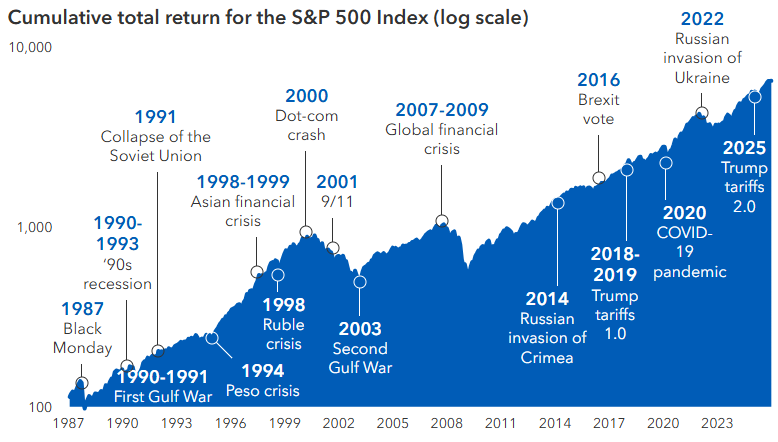
Source: Capital Group, Standard & Poor’s

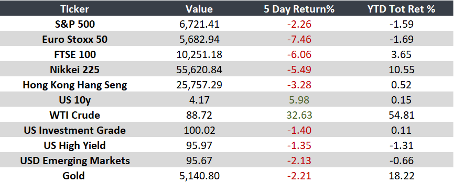
Global Outlook: Inflation, Rates, and Conflict

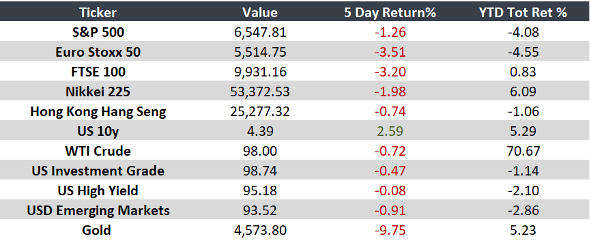
Markets faced a week marked by geopolitical tensions and inflationary pressures. While the U.S. shows labor market resilience, Europe and Japan present mixed signals, and emerging markets like Mexico face challenges in growth and inflation.

United States

Negotiations with Iran remain stalled despite a temporary truce. Manufacturing PMI hits an 11-month low; rising import prices reinforce expectations of higher-for-longer interest rates.

Europe

Manufacturing PMI improves, but the conflict increases costs and delays inputs. Business confidence declines amid uncertainty, particularly impacting the services sector.

Japan

Inflation falls below the BoJ target, but the central bank adopts a more hawkish tone amid inflation risks linked to a weaker yen and geopolitical tensions.

China

The semiconductor industry gains momentum driven by AI. It is projected to reach 41% of global capacity in key chips for autos and smartphones by 2028.

Argentina

Economic activity expands, supported by agriculture and fishing, offsetting weakness in industrial and commercial sectors.

Brazil

Consumer confidence improves, driven by better household financial expectations, though current conditions remain weak.

Mexico

Banxico cuts rates to 6.75% in a split decision. Inflation rises and economic activity declines, pointing to a slowdown with ongoing inflationary pressures.

“Everyone has the brainpower to make money in stocks. Not everyone has the stomach.” – Peter Lynch

Key upcoming events

  • In the United States, employment data will be released on 03/31
  • In the United States, nonfarm payrolls will be released on 04/03

Monitor

Holistic Due Diligence Is a Must

Due diligence isn’t just about validating performance metrics or checking boxes on operational risk. In alternatives—where relationships are long-term, structures are complex, and outcomes are path-dependent—successful DD must be holistic. It needs to reflect the full scope of what you’re signing up for: financial, operational, reputational, philosophical, and relational.

In our experience—both at a pension fund and now at a family office—some of the worst outcomes stemmed not from flawed models, but from poor alignment and blind spots outside the “investment” lens.

Investment quality is just the start

Investment DD will always be the anchor. Track record, strategy clarity, team pedigree, edge, and portfolio construction matter. But in alts, that’s the easy part. Most managers we meet know how to tell a good story, show a clean IRR, and present a polished deck. The real work starts once you go beyond that.

Operational due diligence reveals whether they can actually run a stable, compliant, well-governed business. You’re looking at valuation policies, fund admin, cybersecurity, service providers, and more. One lesson we learned the hard way: a fund with top-quartile performance can still be operationally brittle. And when things break, it’s usually operational—not strategic—failures that do the damage.

Risk and reputational DD: don’t skip it

The reality is that family offices can’t afford to ignore reputational risk. You’re not just a number on a cap table; your capital comes with a name, a story, and often, a legacy. That means DD must now include headline-risk scanning, regulatory flags, and tax behavior scrutiny.

At Activest we’ve walked away from managers with stellar returns but questionable tax setups. Why? Because aggressive tax structuring often correlates with overly “creative” accounting. If they’re pushing boundaries on one front, you have to ask where else they’re cutting corners.

Similarly, we’ve tightened our screens around ESG controversies and governance patterns. A GP embroiled in labor disputes or past sanctions might not affect this quarter’s NAV—but it can absolutely affect your long-term brand, values, and peace of mind.

Alignment and philosophical fit are everything

Some of the most important DD questions aren’t in the data room. They’re in the conversations.

  • Do they think in terms of compounding, or of raising the next fund?
  • Do they cap fund size to preserve performance, or do they chase AUM?

How do they handle mistakes—and communicate when things go wrong?

We’ve declined funds not because they lacked performance, but because they lacked cultural fit. If the manager’s approach to risk, alignment, and communication doesn’t match ours, the relationship will fray over time. It’s not just about the numbers; it’s about how those numbers are achieved—and how repeatable that process is over 15–20 years.

One of the things we’re most grateful for is that alignment internally. We make plenty of mistakes, but our goals and vision remain unified—and genuinely, that’s what makes the whole platform work. Everyone—from investment to ops to IC—understands that compounding capital and protecting the family’s reputation are two sides of the same coin.

DD as a long-term partnership filter

Ultimately, we treat due diligence as the start of a potential long-term partnership. Whether it’s a GP, a co-invest platform, or a direct operating company, our lens is simple: Would we be comfortable doing business with this team across a cycle? Would we want to deepen the relationship if things go well—or would we feel exposed?

That’s why we pace our involvement: primaries first, then secondaries, then co-invests, and only much later, direct deals. By the time we consider a direct, we’ve already seen the GP under pressure, across exits, and in less-than-perfect environments. That’s when trust becomes tangible.

Holistic due diligence is not just a best practice—it’s a requirement if you want to build a resilient alternatives portfolio. Investment, operational, risk, tax, reputational, and philosophical alignment all matter. In isolation, each might look “fine.” But when woven together under a unified framework, they create a powerful filter that protects capital and compounds confidence over decades.

Source: AWM Internal Analysis

Markets focused on inflation and geopolitical risks

Financial markets remained volatile amid ongoing inflationary pressures and geopolitical risks. Monetary policy decisions and economic data continue to shape expectations for global growth.

United States

The Fed kept rates unchanged at 3.5%–3.75% amid persistent inflation and rising energy prices. It also eased bank capital rules, while the PPI surprised to the upside and jobless claims confirmed labor market strength.

Europe

Germany’s economic sentiment dropped sharply due to higher energy costs, although PPI declined on lower energy prices. The Bank of England held rates steady, while UK unemployment stabilized at elevated levels.

Japan

The Bank of Japan maintained its policy rate at 0.75% and warned of upside inflation risks linked to oil prices. Exports rose for a sixth consecutive month, though supply chain risks remain due to higher energy costs.

China

Industrial production expanded, supported by technology and shipbuilding sectors. However, the housing market remains weak, with declining prices and unemployment rising above expectations.

Argentina

Unemployment rose to 7.5% in Q4 2025, while consumer confidence fell to levels last seen in October, reflecting a challenging economic environment.

Brazil

The central bank cut rates to 14.75%, less than expected, citing inflationary and geopolitical risks. Industrial confidence declined amid high interest rates and global uncertainty.

Mexico
The Mexican Banking Association revised down expectations for rate cuts due to global inflation risks. GDP growth is projected at 1.5% in 2026, still below potential. Key US PMI and labor data will be released this week.

“Never invest in a business you cannot understand.” – Warren Buffett

Key upcoming events

  • In the United States, Manufacturing PMI will be released on 03/24
  • In the United States, employment data will be released on 03/26

Monitor

Fed Holds Rates Amid Uncertain Outlook

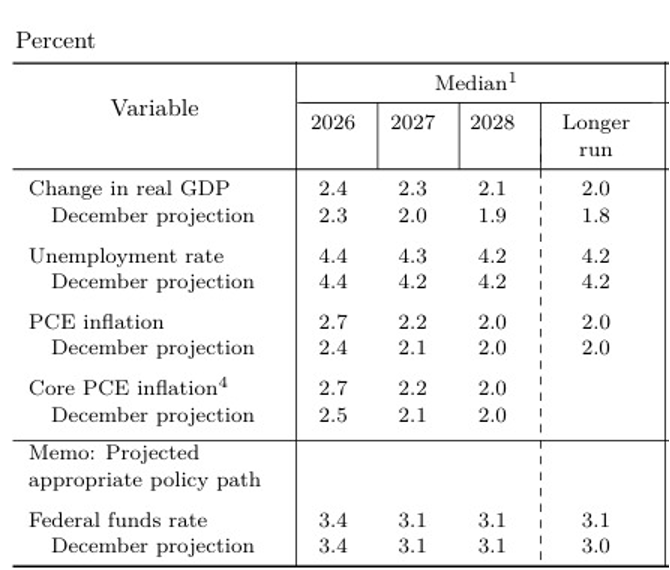
The Federal Reserve decided to keep its benchmark interest rate unchanged within a range of 3.5%–3.75%, amid persistent inflation, mixed signals from the labor market, and rising geopolitical tensions.

While projections point to solid economic growth and a gradual moderation in inflation, higher oil prices and uncertainty related to the conflict in the Middle East have reduced expectations for near-term rate cuts. Policymakers continue to signal a cautious stance, with gradual adjustments expected over the coming years.

Analysis

The current environment reinforces central banks’ data-dependent approach and highlights the importance of external factors such as energy prices and geopolitical risks. Limited visibility on rate cuts could keep financial conditions restrictive for longer.

Market context

The Federal Reserve’s decision to keep rates unchanged reflects a complex balance between inflation dynamics, economic growth, and external risks. Rising oil prices and geopolitical uncertainty have reduced expectations for near-term rate cuts.

In this environment, monetary policy will remain highly data-dependent and shaped by global developments. This reinforces the importance of maintaining discipline, diversification, and a long-term strategic approach in portfolio construction.

Economic projections

Economic Projections of Federal Reserve Members

Source: Federal Reserve

Software and Liquidity in Private Credit

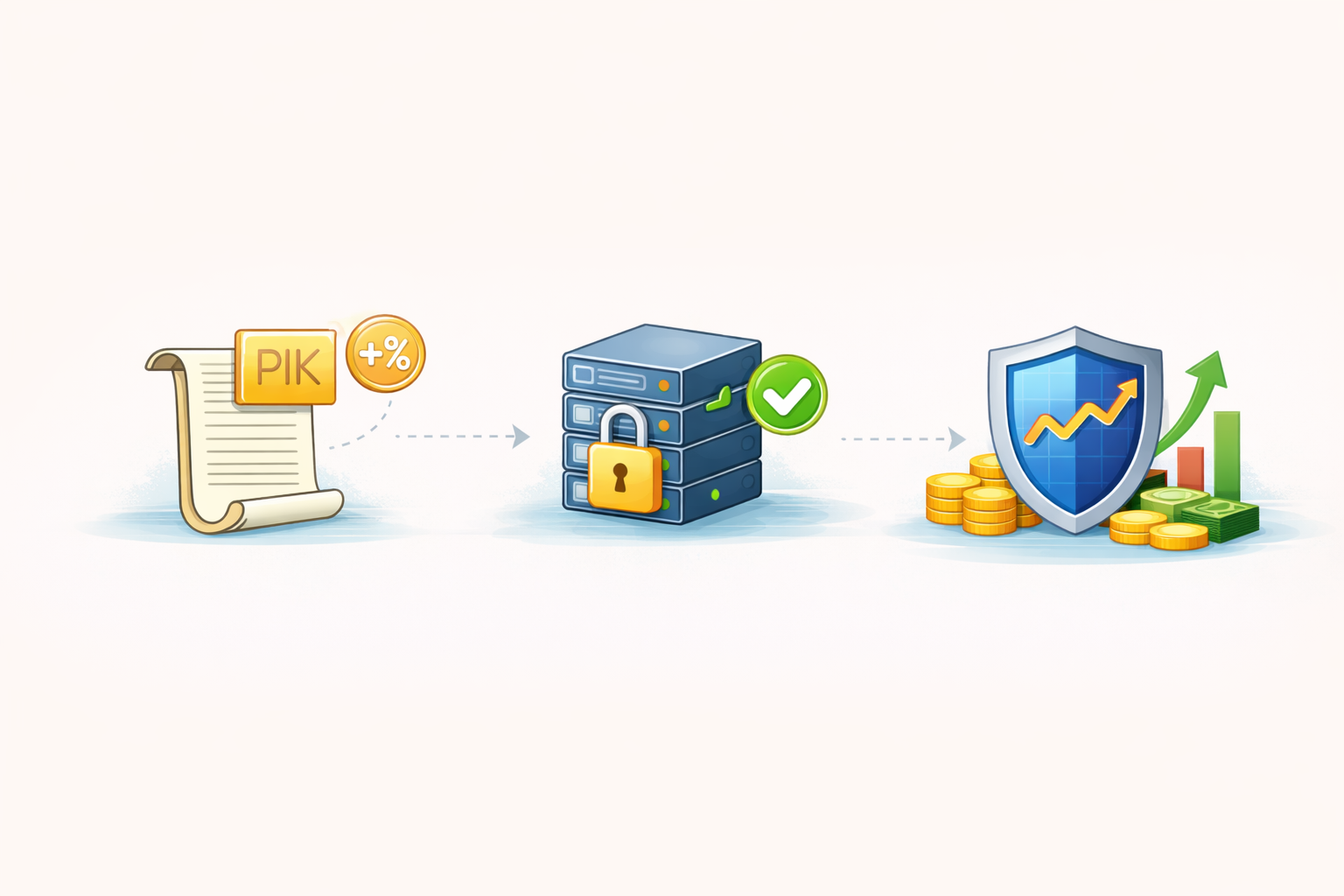
PIK exposure remains stable at 6.6%, reflecting the structural flexibility characteristic of private credit. The portfolio maintains a meaningful allocation to software, historically the sector with the lowest default rates due to high margins, low capex, and recurring revenue.

PIK and structural flexibility

Liquid (traded) loans should not have PIKs. PE sponsors seek capital flexibility and access — that’s a key value driver of private credit.

PIK is a form of flexibility — more common in private credit, not applicable in public markets. Bain, for example, does not offer PIK flexibility — they lend to significantly smaller businesses than BCRED’s target market.

PIK is a form of flexibility — reserved for private credit, absent in public markets. Bain: no PIKs, but their borrowers are significantly smaller than BCRED’s portfolio companies.

Software as a defensive sector

Software: historically the lowest default sector in private credit — driven by low capex, high margins, and recurring revenue. Attractive sector for capital deployment.

98% first lien. Focus on scale businesses: ~$360mm average EBITDA. ~$4bn average total enterprise value per portfolio company. Healthy businesses.

Lowest default sector over the past 20 years — key rationale for the overweight.

Artificial intelligence risk

On AI risk to software: Jensen Huang’s view — people will be more efficient, but enterprises won’t rebuild core software in-house. AI is a tool, not a replacement for existing software companies that hold patents and deep integrations (e.g., no one is rebuilding Dropbox).

Underwriting process: before any investment, Blackstone’s tech team (based in Miami) evaluates the business, and then consults multiple Blackstone PE teams — if the PE teams would not invest in the equity, Blackstone will not lend to the company.

Largest software positions include cybersecurity. Not all software is the same — Blackstone categorizes by AI exposure and risk profile.

Of the ~26% software allocation, only ~5% is considered at risk from AI disruption. Meaningful headwinds identified; currently marked at ~88 cents on the dollar.

Worst-case scenario (100% default, recovery at 75 cents on the dollar): ~30bps drawdown to NAV.

Liquidity and maturities

Average remaining loan maturity: 3–5 years (~4 years average). Contract lengths align with loan maturities — provides visibility into repayment.

12–15% of the loan book matures this year; capital is also being deployed, maintaining strong liquidity. New capital being deployed in parallel — active recycling. A lot of liquidity.

Currently underlevered; target is 1:1 leverage ratio.

BCRED holds the highest credit rating of any private credit fund globally.

Source: Internal Research AWM

Energy-driven volatility and mixed inflation signals shape global markets this week.

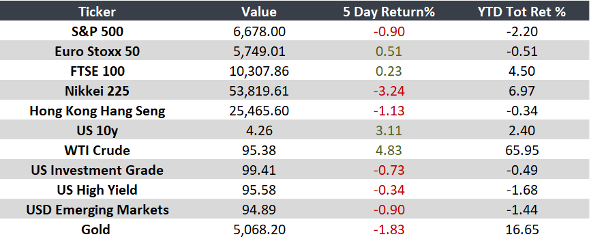
Markets are navigating geopolitical tensions, energy pressures, and diverging economic signals. While inflation is moderating in some economies, growth prospects and monetary policy remain influenced by ongoing global uncertainty.

United States
Volatility increased amid Middle East tensions and rising oil prices. Inflation held at 2.4%, while the trade deficit narrowed following record exports. Jobless claims declined, suggesting the labor market remains resilient.

Europe
German inflation eased to 1.9%, though core inflation remains elevated. Industrial production and exports declined. The ECB warned of inflation risks linked to higher oil prices, signaling a potentially less accommodative policy stance.

Japan
GDP grew 1.3% in 2025, driven by stronger investment and consumption. Producer inflation moderated to 2.0%, pointing to some stabilization in industrial costs.

China
Inflation rose to 1.3% due to Lunar New Year spending. Exports surged 21.8% in the first two months of the year, generating a large trade surplus supported by manufacturing and technology sectors.

Argentina
Inflation increased to 33.2% in February. Despite the monthly rise, it remains well below the country’s historical average, reflecting progress in macroeconomic stabilization.

Brazil
Annual inflation slowed to 3.81%, although monthly inflation rose due to seasonal factors. Retail sales grew 2.8% year-over-year, indicating resilient consumer demand.

Mexico
Inflation rose to 4.02%, with core inflation remaining elevated, potentially delaying interest rate cuts. The USMCA review and energy price dynamics will be key themes. Authorities agreed to keep regular gasoline prices stable.

“If you aren’t willing to own a stock for 10 years, don’t even think about owning it for 10 minutes.”

– Warren BuffettForma

KEY UPCOMING EVENTS

  • In the United States, industrial production data will be released on 03/16.
  • In the United States, the FEDs monetary policy decision will be released on 03/18.

Monitor

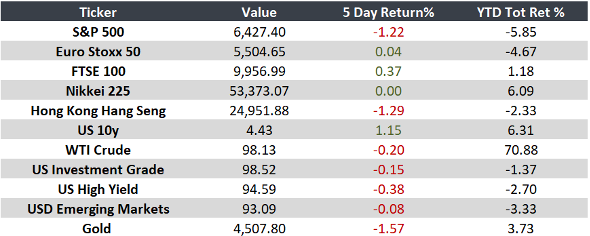
Returns as of 10 AM EST.

Start Simple: A Core-First Approach to Alternative Investing

The alternative investments world is growing fast, but so is the confusion around how to approach it. I’ve seen investors jump into alts with ambitious, exotic bets—venture funds, crypto hedge funds, distressed debt specials—before building a core foundation. That’s rarely a good idea.

Just like you don’t start fixed income investing with high-yield EM debt, you shouldn’t start private markets with the alts equivalent of rocket fuel.

The Reality of First Steps

In my experience at both a pension fund and now a family office, the most effective portfolios I’ve seen didn’t begin with what’s flashy. They began with what’s durable.

When we started building our alternatives allocation at the family office, we didn’t begin by chasing alpha through frontier VC. We started with private credit. It was relatively “boring” on the surface—but that was exactly the point.

Too often, “alts” are pitched as the high-octane portion of a portfolio. And while that can be true in later stages, the first goal should be building a base layer that complements traditional exposures with income, resilience, and true diversification.

Education Before Complexity

The knowledge gap in alternatives is real. I’ve seen smart advisors with excellent public market skills struggle with the structural nuances of alts: capital calls, valuation lags, illiquidity profiles, GP selection, waterfall mechanics.

That’s not a knock—these concepts aren’t intuitive unless you’ve worked with them.

That’s why I firmly believe alternative investing should follow the same logic we use in public markets: start with what you can explain clearly to yourself and your stakeholders.

In fixed income, that might be treasuries. In equities, the S&P 500. In alternatives, the equivalents are:

  • Private credit with solid underwriting and short to medium-term maturities
  • Core/core-plus real estate for income and inflation sensitivity
  • Broad-based private equity buyout funds with seasoned managers

These are not “exciting” stories to pitch. But they are strategies that provide yield, stability, and learning opportunities. Importantly, they help the allocator (and the governance body) get familiar with alts mechanics before layering complexity.

A Practical Progression

I think of alts entry as a “training wheels” stage—not because investors are unsophisticated, but because the mechanics and manager dispersion in private markets are different.

Here’s how we think about sequencing exposure:

  1. Private Credit – First for predictable income, shorter duration, and underwriting clarity
  2. Private Equity – Then for growth and compounding over long cycles
  3. Real Assets – Infrastructure and real estate offer inflation hedges and tangible anchors
  4. Hedge Funds – For strategic diversification, but only with clarity on strategy fit
  5. Venture – The aggressive play
  6. Anything and everything else – Special situations, crypto, sector niches

We followed this sequence at the family office and it allowed the IC and broader team to gain confidence with each layer before adding the next. It also avoided the performance and governance headaches that can come from leaping into illiquid, idiosyncratic deals too early.

Alts are powerful, but they’re not magic. Like any asset class, their success in a portfolio depends on how well they’re understood, implemented, and managed. The danger lies in starting with “alpha” before mastering “beta.”

So, before going all-in on that new AI-focused VC strategy or that complex special situations fund, ask: Have we built the right foundation?

Because when the next downturn hits—or when liquidity is needed—boring may just become beautiful.

Source: AWM Internal Analysis

Weekly Economic Outlook: Risks and Resilience 

The week delivered a diverse economic outlook: weaker employment and consumer data in the U.S., signs of industrial recovery in Europe and Asia, and structural adjustments alongside moderate growth prospects in Latin America.

United States

Nonfarm payrolls fell by 92,000 in February and the unemployment rate rose to 4.4%, largely due to temporary factors. Consumer activity also softened, while rising cost pressures in manufacturing and services increased inflation risks.

Europe

In the U.K., construction fell to its lowest level in 14 months, although manufacturing expanded on stronger external demand. In Germany, both manufacturing and services grew in February, supported by orders and stimulus despite higher costs.

Japan

Unemployment rose to 2.7% in January, signaling a cooling labor market. In contrast, the manufacturing PMI reached its highest level in nearly four years, supported by exports, new orders, and stronger business optimism.

China

Economic activity accelerated in February, with both manufacturing and services PMIs exceeding expectations thanks to exports and job creation, although business optimism softened due to rising costs.

Argentina

The government announced it will prioritize a comprehensive tax reform in 2026 aimed at reducing the tax burden to support growth, alongside changes to the electoral and criminal frameworks.

Brazil

The economy grew 2.3% in 2025, its slowest pace since the pandemic. A weak year-end performance strengthens expectations for interest rate cuts in 2026.

Mexico

Remittances fell 1.4% year over year in January, the first decline for that month since 2015. Although investment rebounded at the end of 2025, the year closed in contraction. Analysts raised the 2026 growth forecast to 1.46%.

“If a business does well, the stock eventually follows.” – Warren Buffett

Key upcoming events

  • In the United States, employment related data will be released on 03/10
  • In the United States, February’s inflation data will be released on 03/11

Monitor

Escalation in the Middle East and Markets

The United States and Israel launched airstrikes in Iran, marking an escalation that heightens global geopolitical tensions. Brent crude and gold moved higher following the attacks. While the conflict could increase short-term volatility, the current consensus is that there will be no prolonged disruption to global energy supply.

Markets will remain focused on the Strait of Hormuz, through which roughly 20% of the world’s oil and gas flows, as well as on Iran’s response.

Analysis

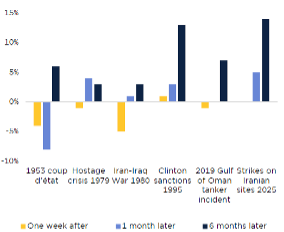
Historically, geopolitical shocks tend to generate short-lived episodes of volatility unless they evolve into broader economic disruptions. At this stage, the central scenario points to a limited impact on global energy supply.

In this environment, maintaining discipline, diversification, and a long-term perspective remains key to managing risks and capturing opportunities.

Historical context

History shows that geopolitical shocks often translate into short-term volatility, but not necessarily into lasting economic damage. The performance of the S&P 500 during previous conflicts in the Gulf countries confirms this pattern.

Source: Bloomberg, Edmond de Rothschild

Ponte en contacto con nosotros

Receive the best financial market news

Cookie Policy

We use our own and third party cookies to improve our services and show you advertising related to your preferences, by analyzing your browsing habits. By continuing, you confirm that you have read and accept this policy.