Uriel Loredo

Markets Navigate Policy and Growth Signals

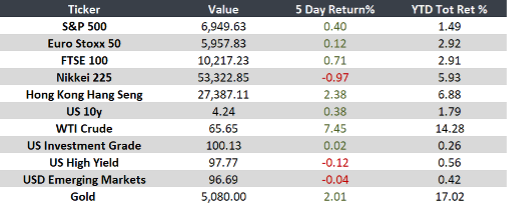
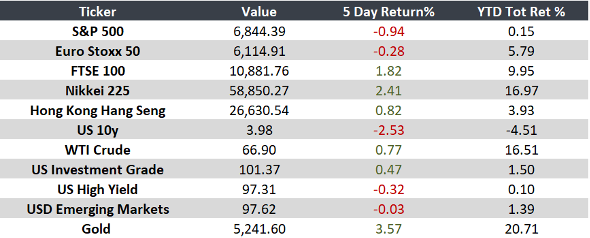
Markets are balancing solid earnings, evolving trade policy, and diverging inflation trends across regions. While growth remains resilient in some economies, policy uncertainty and valuation levels continue to guide investor positioning.

United States

The Supreme Court struck down “emergency” tariffs due to lack of Congressional approval. The Administration introduced a new 10% global tariff. PPI rose 0.5% in January, core at 3.6%. Earnings remain strong, while jobless claims suggest a steady labor market and a Fed on hold.

Europe

Eurozone inflation eased to 1.7%, below the ECB target range, with core at 2.2%. Germany’s inflation moderated to 1.9%, though services remain elevated. Business confidence improved, but consumer sentiment softened amid geopolitical uncertainty.

Japan

The leading economic index reached its highest level since May 2024, supported by labor strength. Services inflation rose 2.6%, reflecting wage pressures. Consumer sentiment weakened due to higher costs and interest rates.

China

The IMF urged China to shift toward consumption-led growth and reduce industrial subsidies, aiming to address external imbalances following record trade surpluses.

Argentina

Economic activity rose 3.5% year-over-year, led by agriculture and mining. Retail sales increased 16.1% nominally, though real consumption declined due to inflation pressures.

Brazil

Brazil posted a primary surplus below expectations, as spending growth outpaced revenue gains, adding pressure to fiscal balance targets.

Mexico

Inflation rose to 3.92% in early February, with core easing slightly. Economic activity expanded 3.3% in December, but unemployment increased to 2.7%, with over 700,000 jobs lost in January.

“Buy a stock the way you would buy a house. Understand and like it such that you’d be content to own it in the absence of any market.” – Warren Buffett

Key upcoming events

  • In the United States, manufacturing PMI will be released on 03/02
  • In the United States, nonfarm payrolls will be released on 03/05

Monitor
Growth cools; inflation persists


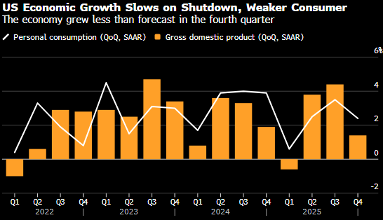
The U.S. economy grew at a 1.4% annualized rate in the fourth quarter of 2025, below expectations, as the government shutdown weighed on spending and exports. For the full year, growth came in at 2.2%, down from 2.8% in 2024.

Meanwhile, core inflation rose to 3% year over year in December, remaining above the Federal Reserve’s target.

Private demand analysis

Although the headline GDP figure was weak, private demand showed resilience: final sales to private domestic purchasers increased 2.4% and private investment rose 3.8%. The main drag came from federal government spending.

With inflation still elevated, the Fed is likely to maintain a cautious stance before considering further rate cuts.

Implications

At the same time, core inflation reached 3%, still above the Federal Reserve’s target. While the headline growth figure was soft, private demand and investment showed resilience. The overall backdrop suggests the Fed will remain cautious in the months ahead.

Source: Bureau of Economic Analysis, Bloomberg

Moderate Growth and Mixed Signals

The week brought signs of slowing growth in the U.S., persistent inflation pressures in Europe, and ongoing adjustments across Asia and Latin America. Markets remain focused on inflation, interest rates, and geopolitical risks.

United States

Q4 2025 GDP grew 1.4%, below expectations, impacted by the government shutdown. The Fed maintained a restrictive tone amid persistent inflation and rising oil prices driven by tensions with Iran.

Europe

Germany posted 2.1% inflation and weaker investor confidence. In the U.K., inflation eased to 3.0%, but unemployment rose to 5.2%, reinforcing expectations of a potential rate cut.

Japan

The economy grew 0.2% in 2025, below forecasts. Inflation moderated, while exports surged 16.8%, narrowing the trade deficit.

China

State-owned enterprises are set to acquire real estate projects to reduce excess supply and stabilize the property market, potentially easing economic headwinds.

Argentina

A trade surplus is projected for January, supported by stronger exports and lower imports, reinforcing the Central Bank’s reserve accumulation.

Brazil

Economic activity expanded 2.5% in 2025, driven by the agricultural sector. The environment remains shaped by restrictive interest rates aimed at containing inflation.

Mexico

Manufacturing employment declined 2% in 2025. Banxico is evaluating potential rate adjustments amid 3.77% inflation, while Fitch warned of challenges to the 2026–2030 infrastructure plan.

“The longer you can extend your time horizon the less competitive the game becomes.” – Howard Marks

Key upcoming events

  • In the United States, employment-related data will be released on 02/24
  • In the United States, Producer Price Index (PPI) inflation data will be released on 02/27

Monitor

A Practical Taxonomy of Alternative Investments 

Understanding the Diversity of Alternatives: From Real Estate to Crypto

One of the most common questions I get from new team members or family principals is deceptively simple: “What exactly do you mean by alternatives?”

It’s a fair question. “Alts” is a broad label that covers everything from core real estate to crypto tokens.

But in my experience—both at a pension fund and now at a family office—how you classify and organize the alt universe shapes how you build, manage, and ultimately compound capital through it.

At AWM, we use a framework that breaks the space into ten categories: private equity, private debt, real estate, infrastructure, venture capital, hedge funds, secondaries, crypto, co-investments, and direct deals. It’s not perfect, but it’s practical—and it helps ensure we stay thoughtful about the role each bucket plays.

Core Categories: Income, Inflation Protection, and Growth

Private equity and venture capital are the long-term growth engines. PE focuses on improving mature businesses, often over 5–10 years, while VC backs early-stage, high-upside companies. Both are illiquid, high-risk, and long-duration—but also the best shot at accessing true alpha from private markets. They don’t generate regular income, and inflation protection is indirect, but they’re crucial for long-run compounding.

Private debt, on the other hand, is more about steady income. Direct lending, real estate credit, and asset-backed strategies can offer attractive yields, especially when structured with floating rates—which can help when inflation and rates are rising. But credit selection and downside protection become even more critical in downturns.

Real estate and infrastructure are classic “real assets.” They tend to shine during inflationary periods because rents, tariffs, and replacement costs rise with prices. Income streams are often contracted and predictable. Infrastructure—especially in regulated utilities, transport, and digital infra—offers particularly bond-like cash flows, but with the added benefit of tangible asset backing.

Strategy-Oriented Exposures and Portfolio Tools

Hedge funds are more about strategy than asset class. Some seek diversification through macro or market-neutral exposures. Others focus on yield via credit or arbitrage. In my pension fund days, we leaned on certain macro and quant managers for downside protection when rates and equities were both challenged. But dispersion is wide, and fees can erode value quickly without tight underwriting.

Secondaries are a portfolio construction tool. They offer accelerated deployment, discounted entry, and vintage diversification—especially helpful when building a new program. They’re not a direct inflation hedge, but they provide flexibility and cash flow smoothing, which helps in overall planning.

Co-investments and direct deals are where concentrated views meet deep alignment. In our framework, they sit on top of a primary-led core, and we only pursue them after years of building GP relationships and in-house diligence capabilities. They can enhance returns, especially when done with low fees and strong control, but they require more time, judgment, and risk management.

Emerging Exposures and the Role of Crypto

Cryptocurrencies are firmly in the alt category now. We treat crypto as a satellite position—small, high risk, and with a very different return driver. Bitcoin may be “digital gold” in theory, but in practice its behavior has varied across regimes. For us, crypto is less about inflation hedging and more about optionality on new infrastructure and asset paradigms. It’s not core, but it’s worth understanding.

Pulling It All Together

This classification helps us design portfolios where:

  • Core real assets and private credit deliver income and inflation resilience
  • Growth strategies like PE, VC, and directs aim for long-term capital appreciation
  • Tools like secondaries and co-invests improve pacing and net returns
  • Satellites like hedge funds and crypto add diversification and idiosyncratic upside

The Takeaway

In alternatives, how you organize matters almost as much as what you invest in. A clear, working taxonomy makes better decisions easier: where to lean in, where to stay cautious, and how to sequence capability development. That’s what turns a collection of deals into a real portfolio.

Source: AWM Internal Analysis

Weekly global macro outlook

The global economy continues to show moderate growth, with inflation easing in developed markets while emerging markets face more persistent pressures. Central banks remain focused on stability and monitoring macro risks.


United States
Employment surprised to the upside and inflation continues to moderate, giving the Fed room to keep rates steady. Corporate earnings remain strong, with solid profit growth and a high share of positive earnings surprises.


Europe
The eurozone posted moderate growth, led by Ireland and Spain. The U.K. continues to show weak growth but early signs of housing recovery, while policymakers focus on strengthening regional competitiveness.


Japan
Corporate bankruptcies reached a 13-year high due to rising labor costs and worker shortages, particularly impacting SMEs, amid weak real wage growth.


China
Low inflation and persistent deflationary pressure reinforce expectations for additional stimulus. Structural weakness in the real estate sector continues.


Argentina
Inflation accelerated again, driven by food and services, maintaining pressure on purchasing power and macro expectations.


Brazil
Inflation rose due to housing and transportation, while producer prices remain in a deflationary trend, reflecting easing upstream cost pressures.


Mexico
Core inflation remains elevated, led by services. Industrial activity shows moderate recovery, while the auto sector faces external trade pressures.

The Fed Enters a New Phase  

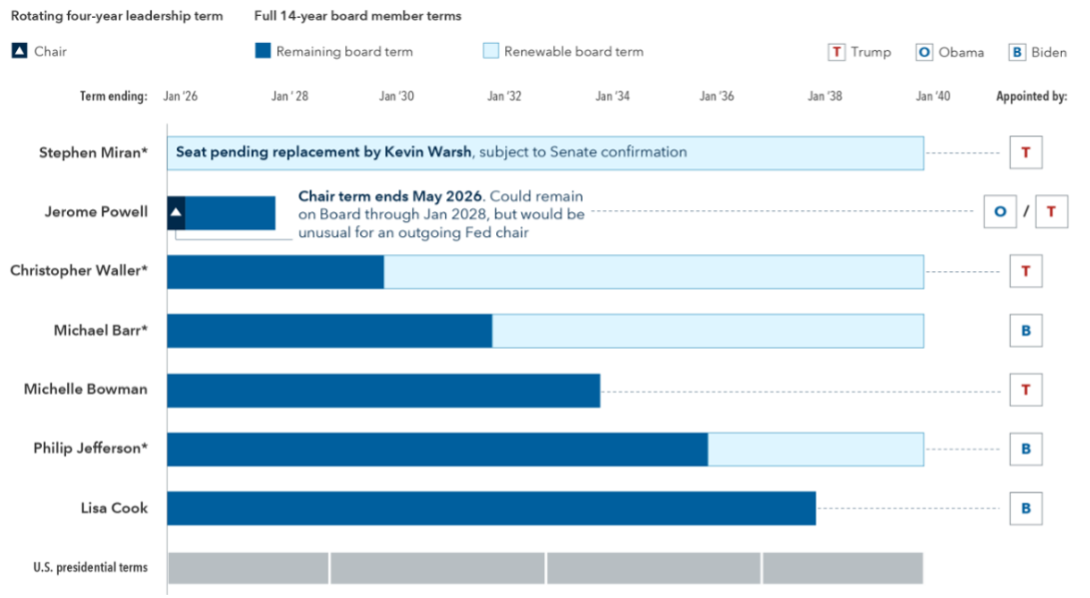
The nomination of Kevin Warsh as the next Chair of the Federal Reserve marks an inflection point for U.S. monetary policy. While he has recently signaled a more pro–lower rates stance, his track record points to a pragmatic, data-dependent approach.

Economic context

With a softening labor market, inflation still above target, and a politically sensitive backdrop, the Fed faces complex decisions. Current signals suggest rate cuts will continue gradually, guided more by economic fundamentals than political pressure.

Market implications

A change in Fed leadership does not automatically imply a loss of independence. Even with a potentially more flexible stance, investors should maintain a long-term investment mindset focused on value creation across market cycles.

Volatility is likely to remain a relevant factor if markets perceive deviations from the Fed’s traditional mandate. This is an environment that calls for careful analysis and a long-term perspective from investors.

Source: Capital Group, Brookings, Federal Reserve

Mixed signals in employment, inflation, and global activity 

The week delivered mixed signals: strong corporate earnings resilience in the U.S., moderating inflation in Europe, and some slowdown across parts of LatAm, while Asia shows early signs of stabilization in industrial activity.

United States

Private job growth slowed, but manufacturing and services remain resilient. Earnings season remains strong, with 80% of companies beating estimates and earnings growing 15% year over year.

Europe

The ECB held rates steady as inflation continues to moderate. Germany posted an industrial rebound, while the BoE showed internal divisions on the rate path.

Japan

Manufacturing returned to expansion after several months of contraction, and services reached their highest level in nearly a year, signaling a gradual recovery in activity.

China

Manufacturing strengthened on higher external demand and production, supporting factory hiring and suggesting stabilization in the industrial cycle.

Argentina

A new agreement with the U.S. on critical minerals aims to accelerate investment and exports, following a record year for the mining sector.

Brazil

Private-sector activity stalled as manufacturing weakness offset services growth, weighing on employment and increasing input costs.

Mexico

Banxico paused rate cuts amid persistent inflation. Remittances declined after record years, and manufacturing remains weak due to tariffs and softer external demand.

“Most people get interested in stocks when everyone else is. The time to get interested is when no one else is.” – Warren Buffett

Key upcoming events

  • In the United States, the Nonfarm Payrolls report will be released on 02/11
  • In the United States, the Inflation report will be released on 02/13

Monitor

Is Bitcoin the Future? A Critical View 

Although Bitcoin was pioneering and revolutionary, its role as the foundation of a global financial system reveals key limitations that merit careful consideration.

Structural limitations

Bitcoin by its nature is limited to only 21 million coins. If we were able to mine them faster (quantum computing, I’m looking at you) or we run out (2150’s according to latest estimates), we will experience a crash akin to the silver boom of the 1850’s or the gold scarcity of the early 1900’s. This is giving away a powerful stabilization tool, i.e. monetary policy, to the quickness of mining. Relying on an external force to underpin global stability ends in catastrophe.

While the narrative of decentralized freedom of the individual against corrupt forces trying to control the world is a great story, life is more nuanced than that and underpinning the stability of the world’s economy to the mining and availability of bitcoin seems foolhardy to me. If bitcoin is cash and cash is bitcoin, any loss of bitcoin will mean a permanent loss of cash. So if someone were to mistakenly discard a hard drive, all of us collectively would have to live with less money. That is a problem, specially given our expansionary economies.

This is only highlighting a narrow issue. You have to also take into account the externalities of such a system, one of them being energy consumption in a world that is now hungrier than ever before for power, and many others which are outside the scope of this post.

The real future of cryptocurrencies

I believe in a not too distant future we will use the full benefits of crypto, decentralized ledgers, tokenization, smart contracts, and frictionless flows of capital. But I don’t think we will do it with bitcoin.

All throughout history humanity has tended to favour standardization and liquidity as they are more efficient over any other concerns when dealing with our methods of exchange for goods and services. The fungibility of gold nuggets (and its wide availability spread almost evenly worldwide) made it outcompete barter. These nuggets which in turn were displaced with coins, which were displaced by notes backed with that gold, which were displaced by debt backed by those notes backed by gold until we got to where we are today, where the exchange of services is backed by debt underpinned in trust.

To many people, the underpinning of the global economy in trust is a crazy idea born out of the lunacy derived from the Bretton Woods system, and it is true that our current economic model was partially developed at that conference. However, the idea is much older than that—about 1700 years old in fact.

Is it true that fiat money is backed by nothing? Correct, as its backing is not a tangible thing but an intangible one: trust. The world economy is fuelled by debt, which is a promise of deferred consumption in exchange for a future greater payment.

The real revolution

The big change I see derived from the crypto breakthrough is that trust can now be decentralized and assigned on an individual basis to anything and everyone around us. So in the future I could buy a car A using Z crypto which the dealer can convert to coin Y directly without having to rely on intermediaries or governments. This system will be backed both by the asset itself and the underlying expansionary coins we develop, which will be a mix of trust and asset backed.

Ironically, this would make the whole system pretty much a barter-based economy but with the fungibility, standardization, and liquidity of our current system.

In my opinion, crypto will be the foundation of our future method of exchange of goods and services, but it won’t be bitcoin.

Would love to hear your thoughts—why you think I’m right or why you think I’m wrong.

Source: Daniel Sánchez

Global outlook: inflation, growth, and trade 

Global markets reflect a balance between solid growth in developed economies, persistent inflationary pressures in certain sectors, and ongoing monetary policy adjustments in emerging markets.

United States

The Fed kept rates at 3.5%–3.75% amid solid growth and stable employment. PPI rose 0.5% month on month, and the trade deficit widened in November, potentially weighing on Q4 GDP.

Europe

Eurozone GDP grew 1.3% YoY in Q4 2025, exceeding expectations. Germany expanded 0.4% YoY, with inflation rising due to food prices, while services inflation eased and consumer confidence improved.

Japan

Service-sector prices rose 2.6% YoY in December. Labor shortages and a weaker yen are pushing costs higher, reinforcing the BoJ’s case for continued monetary policy normalization.

China

The government will prioritize domestic consumption of goods and services in 2026 to reduce industrial overcapacity and external dependence, supporting sectors such as tourism, transportation, and digital services.

Argentina

The IMF reaffirmed a 4% growth outlook for Argentina in 2026 and 2027. Globally, it projects 3.3% growth, conditioned by trade tensions, technology investment, and political uncertainty.

Brazil

Brazil’s Central Bank kept its policy rate at 15.00%. A prolonged pause is expected amid risks from services inflation and FX volatility, with the goal of converging to the 3.2% inflation target by 2027.

Mexico

Mexico’s economy grew 0.7% in 2025, beating expectations. Exports rose 7.6%, driven by non-automotive manufacturing. Unemployment ended the year at 2.4%, and Banxico is considering gradual rate cuts.

Key upcoming events 

  • In the United States, the Manufacturing Purchasing Managers’ Index (PMI) will be released on 02/02 
  • In the United States, the Nonfarm Payrolls report will be released on 02/06 

“Waiting helps you as an investor and a lot of people just can’t stand to wait.” – Charlie Munger 

Monitor

The Fed Pauses Rate Cuts Amid Resilience Signals 

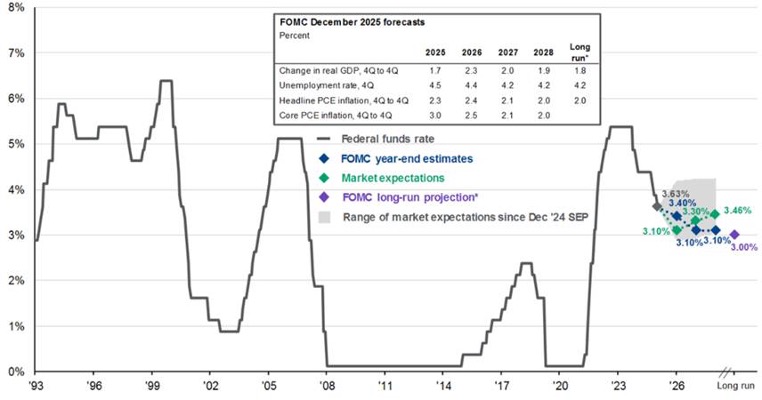
The Federal Reserve kept its benchmark interest rate unchanged at 3.5%–3.75%, signaling a more optimistic view of the U.S. economy. The statement highlighted solid economic growth and early signs of stabilization in the unemployment rate, reducing the urgency for near-term rate cuts. 

While two members voted in favor of a reduction, the majority opted for caution amid persistent inflation pressures and a resilient labor market. The decision reinforces the Fed’s data-dependent approach to monetary policy. 

Market Implications 

Policymakers are balancing inflation control with labor market stability, avoiding premature easing. For markets, this points to a near-term period of stable rates, with the possibility of renewed cuts later in the year if inflation continues to cool. 

The tone of the statement suggests less urgency for near-term rate cuts, as policymakers continue to monitor inflation and employment trends. Key takeaway: caution, data dependence, and the potential for policy adjustments later in 2026 if conditions allow. 

Source: JP Morgan.

Ponte en contacto con nosotros

Receive the best financial market news

Cookie Policy

We use our own and third party cookies to improve our services and show you advertising related to your preferences, by analyzing your browsing habits. By continuing, you confirm that you have read and accept this policy.