Uriel Loredo

Infrastructure 

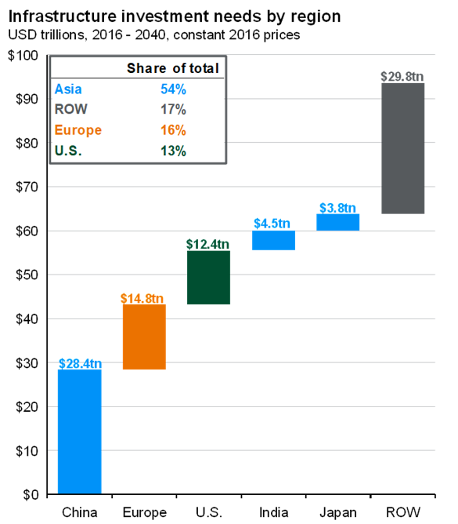
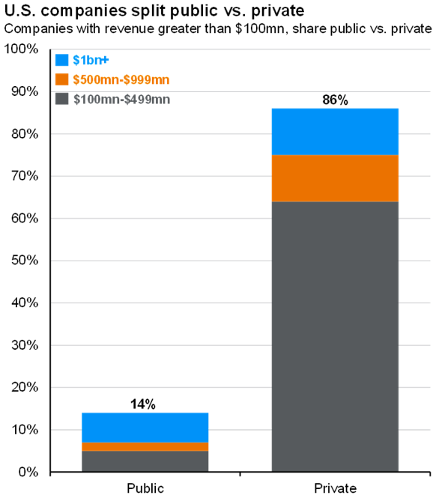
Infrastructure is one of the fastest-growing asset classes within private markets. Understanding what drives it and how it generates value is the first step in evaluating its role in a portfolio.

Fundamentals of an asset class built for the long term

Infrastructure encompasses essential assets such as energy, transportation, and digital networks, whose central characteristic is the generation of stable and predictable income over time. Unlike other asset classes, its value does not depend on short-term economic cycles, but on the structural demand for basic services.

In recent years, trends such as the energy transition and digitalization have expanded the universe of available opportunities, attracting institutional capital toward projects with long investment horizons.

However, the current environment presents important nuances: while fundraising has rebounded, it remains concentrated primarily in larger funds. Deal activity, meanwhile, faces pressure from lower transaction volumes.

Source: JP Morgan

Markets: Stability with mixed signals

Stable rates, persistent inflation, and uneven growth define the week

Markets reflect stability in monetary policy, but with increasing divergence in growth and inflation. The geopolitical backdrop continues to pressure expectations and limit global economic visibility.

United States

The Fed held rates at 3.5%–3.75% with an 8–4 split, the largest since 1992. GDP grew 2.0%, driven by AI investment and government spending, but consumption is slowing. Confidence improved, though inflation pressures persist.

Europe

The ECB and BoE held rates but warned of inflation risks from energy. Inflation rose to 3%, while Germany’s economy grew 0.3%, reflecting modest expansion close to stagnation.

Japan

The BoJ kept rates at 0.75% amid internal division over inflation concerns. Retail sales rose 1.7%, driven by the automotive sector, signaling a gradual recovery in consumption.

China

Manufacturing PMI reached its highest level in a year. However, rising input costs from energy and metals are pressuring margins and the sustainability of growth.

Argentina

Fitch Ratings and Moody’s maintain a cautious outlook, highlighting risks from persistent inflation, institutional weakness, and reliance on fiscal adjustment.

Brazil

The central bank cut rates to 14.50%, supported by lower-than-expected inflation (4.37%). The easing cycle continues despite global uncertainty.

Mexico

GDP declined 0.8% in 1Q, with broad-based weakness. Despite record exports (+27.7%), external strength has yet to translate into domestic growth.

“All intelligent investing is value investing. Acquiring more than you are paying for. You must value the business in order to value the stock.” – Charlie Munger

KEY UPCOMING EVENTS

  • In the United States, Services PMI will be released on 05/05
  • In the United States, nonfarm payrolls will be released on 05/08

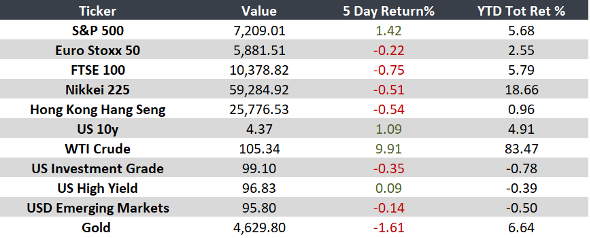
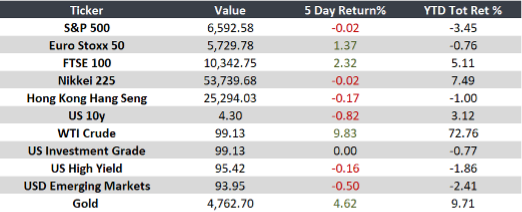
Monitor:

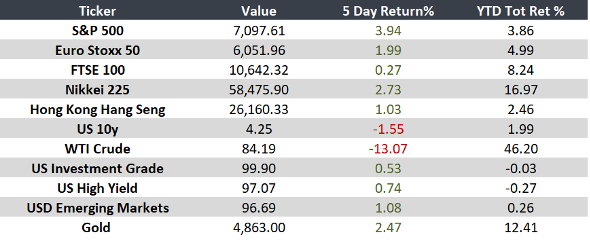
Note: Returns as of April 30th at closing.

Fed: Rates unchanged, but internal divide grows

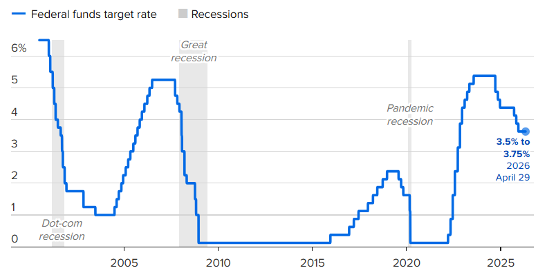
The Federal Reserve kept its benchmark rate unchanged at 3.5%–3.75%, in line with expectations. However, the vote revealed an unusual level of division, with four officials dissenting, the highest since 1992. While some policymakers pushed back against signaling future cuts, another voted in favor of lowering rates. Rising geopolitical tensions, particularly in the Middle East, are increasing uncertainty and complicating the balance between persistent inflation and signs of economic slowdown.

Mixed signals from within

The Fed’s message is more nuanced than the decision itself. Stable rates contrast with a growing internal debate over the policy path ahead. Higher energy prices continue to pressure inflation, while the labor market shows signs of weakening. This backdrop points to increased volatility, with limited visibility on rate cuts and macro risks balanced in both directions.

Source: CNBC

Markets: Stability with Underlying Risks

Market stability, energy pressures, and mixed growth signals shaped the week.

Markets remained stable amid signs of easing geopolitical tensions. However, risks related to energy, inflation, and slowing growth persist across regions.

United States

Stable markets and strong consumption. A resilient labor market and tariff refunds support the outlook, while the Fed remains cautious.

Europe

Energy pressures push prices higher as investor confidence declines. Weak industrial signals contrast with some resilience in consumption.

Japan

Moderate inflation and strong export growth driven by technology demand, with pressure from higher energy imports.

China

Solid growth reduces the need for stimulus. Stable rates reflect confidence in current economic dynamics.

Argentina

Economic activity declines, led by weakness in manufacturing, highlighting a fragile economic environment.

Brazil

Positive export outlook, though dependent on the implementation of the EU trade agreement.

Mexico

Inflation moderates, but investment drops sharply. Consumption remains strong, reflecting a mixed economic outlook.

The week was shaped by diverging signals across regions. While the United States and China maintain positive dynamics, Europe and several emerging economies face structural challenges in energy, investment, and growth. Understanding these divergences is key to evaluating the global positioning of a portfolio.

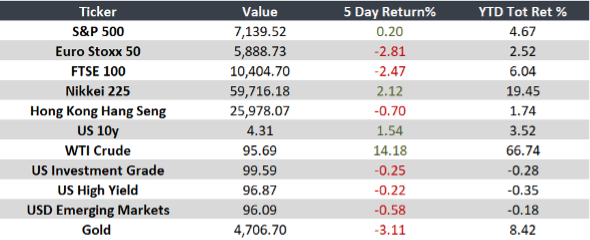
Monitor

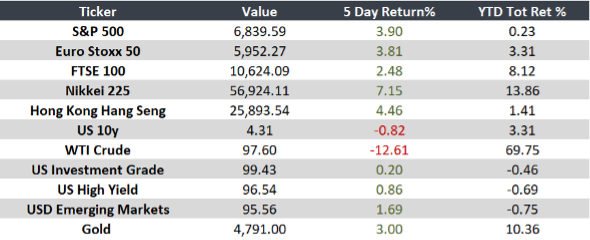
Source: Internal analysis based on market data as of April 24, 2025.

Private Credit

An introduction to this asset class

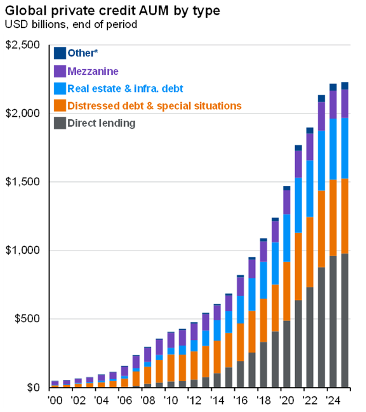
Private credit involves providing direct financing to companies outside the traditional banking system, with structures negotiated on a case-by-case basis. Its growth stems from post-crisis regulatory changes that limited banks’ ability to serve certain market segments, creating space for institutional investors and specialized managers to step in.

Appeal and considerations

Its primary appeal is the generation of recurring income through generally floating-rate instruments, which offer natural protection in high-rate environments. From a diversification standpoint, its low correlation with public assets can help reduce portfolio volatility. That said, it comes with lower liquidity and medium to long-term commitments.

Key factors to evaluate

Evaluating private credit requires attention to three factors: borrower quality, deal structure, and the stage of the economic cycle. Not all strategies are alike — some prioritize stability and income, while others take on higher risk in pursuit of greater returns. Identifying which approach aligns with portfolio objectives is the starting point for incorporating this asset class in a strategic way.

Source: JP Morgan

Markets: Lower Volatility, Mixed Signals

Lower volatility, persistent inflation, and mixed growth signals shaped the week.

Markets experienced lower volatility amid expectations of easing geopolitical tensions. However, inflationary pressures persist alongside mixed growth signals across both developed and emerging economies.

United States

Lower volatility and the S&P 500 reached record highs. Moderate producer inflation and a resilient labor market support a growth environment with contained pressures.

Europe

Inflation rises due to energy, while industrial activity remains weak. The UK stands out with growth driven by services and construction.

Japan

Production grows marginally, and the BoJ may accelerate rate hikes. Slower growth is expected in the coming years.

China

Solid GDP growth, but mixed signals in consumption and employment point to an uneven recovery.

Argentina

Inflation remains elevated despite slight moderation, reflecting ongoing macroeconomic pressures.

Brazil

Consumption slows and industrial confidence declines, signaling deterioration in economic activity.

Mexico

Inflation pressures lead to price control measures. Trade risks rise amid potential changes to USMCA rules.

“Patience is not passive; it is concentrated strength.” – Bruce Lee

Key upcoming events

  • Retail sales data to be released on April 21
  • Employment-related data to be released on April 23

Monitor

Inflation Rises on Energy 

Energy pressures drive inflation higher

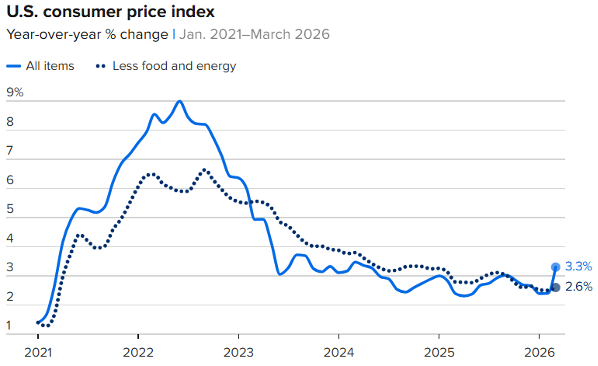
Inflation in the United States rose in March, driven by higher energy prices amid geopolitical tensions. However, core inflation showed greater stability, indicating that underlying inflationary pressures remain contained. This dynamic highlights an environment where short-term movements may distort the broader picture, while the underlying trend remains the primary focus for monetary policy.

The recent inflation increase is largely driven by external and transitory factors. The moderation in core inflation suggests that structural pressures have not intensified. In this context, the Fed may remain patient, focusing on the broader inflation trend beyond temporary shocks, with particular attention to services and labor market conditions.

Source: U.S. Bureau of Labor Statistics

Markets: inflation, energy, and mixed signals

Inflation, energy dynamics, and geopolitical tensions shape the global markets outlook.

Markets are navigating a complex environment, with inflationary pressures tied to energy and ongoing geopolitical tensions weighing on growth prospects. The U.S. shows mixed signals, while Europe and emerging markets reflect slowing activity.

United States

Inflation rises on energy and the services PMI declines amid cost pressures. GDP is revised lower. The Fed keeps rate cuts on the table should inflation moderate or labor market conditions soften.

Europe

Producer inflation slows and consumption remains resilient. However, industrial orders and production in Germany point to economic stagnation.

Japan

Producer prices increase due to higher operating costs, reflecting pressure across industrial and transportation sectors.

China

Consumer inflation moderates, but producer prices rise driven by energy and raw materials, highlighting persistent cost pressures.

Argentina

Industrial production declines sharply across most sectors, reflecting broad-based economic weakness.

Brazil

Inflation rises, driven by fuel and food prices, amid global energy pressures.

Mexico

Inflation remains elevated and Banxico projects gradual convergence. Investment declines amid uncertainty and tight financial conditions.

“The longer you can extend your time horizon the less competitive the game becomes.” – Howard Marks

Key upcoming events

  • In the United States, the Producer Price Index (PPI) will be released on 04/14
  • In the United States, Industrial Production data will be released on 04/16

Monitor

Private Equity: Key Concepts

A simple guide to understand this asset class

Private equity involves investing in companies that are not publicly listed, with the goal of improving their value and exiting the investment over time. These investments typically have longer horizons and depend on factors such as operational growth, market conditions, and exit opportunities. Unlike public markets, capital is deployed gradually, and returns are realized over time, requiring patience and discipline from investors.

Performance in private equity can vary significantly across managers, making manager selection critical. Factors such as exit execution, access to opportunities, and investment discipline directly impact outcomes. In addition, market cycles, interest rates, and liquidity conditions influence the pace of investment and exits within this asset class.

Source: Jp Morgan

Markets: Inflation, Oil, and Slowdown

Inflation, energy dynamics, and mixed growth signals shaped global markets.

Markets reflect a complex environment, with inflationary pressures, geopolitical-driven volatility, and mixed growth signals. The U.S. remains resilient, while Europe faces higher costs and emerging markets show signs of slowdown.

United States

A quieter week, but with mixed signals: solid consumption, softer labor momentum, and rising cost pressures. Recession risk increases amid higher oil prices and tensions with Iran.

Europe

Inflation rises driven by energy and remains above the ECB target. Unemployment is stable, but job creation slows. The UK shows moderate growth.

Japan

Stable labor market, but weak consumption. Retail sales decline despite fiscal support, highlighting fragile domestic demand.

China

Manufacturing PMI improves, supported by public spending and AI demand, though input cost pressures remain elevated.

Argentina

Labor reform partially halted by court intervention, increasing regulatory uncertainty.

Brazil

Decline in producer prices suggests easing inflationary pressures ahead, supporting expectations of price stability.

Mexico

Banxico nears the end of its rate-cutting cycle. Risks persist from low growth and elevated inflation, with weak economic activity and exports.

“The two greatest enemies of the equity fund investor are expenses and emotions.” – Jhon Bogle

Key upcoming events

  • In the United States, Manufacturing PMI will be released on 04/06
  • In the United States, March inflation data will be released on 04/10

Monitor

Note: Short week due to festivities.

Ponte en contacto con nosotros

Receive the best financial market news

Cookie Policy

We use our own and third party cookies to improve our services and show you advertising related to your preferences, by analyzing your browsing habits. By continuing, you confirm that you have read and accept this policy.