Uriel Loredo

Global perspectives: Central banks in the spotlight.

From the U.S. to Brazil, central banks have taken a cautious and more conservative stance.

Investors remain focused on monetary policy perspectives. 

Investors are closely watching developments in monetary policy. Here are the key events: 

  • U.S.: Retail sales rebounded in February (+0.2%), while the Fed kept rates steady and projected only two rate cuts this year, adopting a more cautious tone. 
  • Europe: The BoE maintained its rate at 4.5% and highlighted global uncertainty. Germany passed a key fiscal package. 
  • China: The People’s Bank kept rates unchanged, but consumption surprised to the upside (+4.0%). 
  • Brazil: The Central Bank raised the rate by 100 bps for the third time, signaling a more moderate approach ahead. 
  • Mexico: The OECD warns that 25% U.S. tariffs could lead to a recession in 2025–2026. Fitch forecasts zero growth this year and only +0.8% in 2026. Private consumption stagnated in the early months of the year. 

Signals remain mixed: while some central banks pause adjustments, trade and consumption continue to face challenges. 

In this challenging environment, adaptability and a long-term perspective will be key. 


KEY UPCOMING EVENTS 

  • March 24: In the U.S., housing sector indicators will be released 
  • March 27: In the U.S., the final estimate for Q4 2024 GDP will be published

Monitor
Rate Cuts in Sight: The Fed Adjusts Economic Forecasts

The Fed keeps rates at 4.25%-4.5% but revises growth and inflation projections.

March Monetary Policy Announcement 

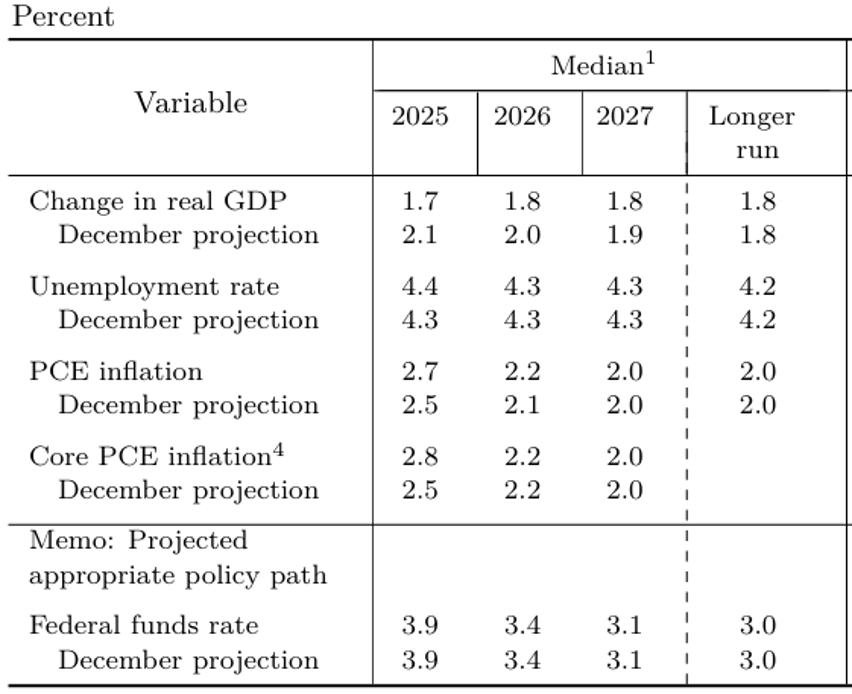
 The Federal Reserve decided to keep its benchmark rate at 4.25%-4.5%, in line with expectations. However, its message was more cautious, as it lowered its growth forecast and raised its inflation estimate for 2025. 

Key Points: 

  • Expectations for two rate cuts this year remain, with rates closing at 3.9%. 
  • The pace of quantitative tightening is slowing, adjusting the reduction of bonds on the balance sheet. 
  • The 2025 growth projection drops to 1.7% (from 2.1%). 
  • Core inflation is estimated at 2.8%, above the previous 2.5% forecast. 
  • Trade tensions are rising due to potential tariffs amid an economic slowdown. 

Markets will closely watch the Fed’s next moves and the evolution of trade tensions. 

Market Implications: 

 Markets will remain attentive to the Fed’s upcoming decisions and the development of trade tensions. 

Fed Indicator Update (March vs. December) 

Source: Federal Reserve

Market Outlook and Strategy 

March 2025 

The beginning of 2025 has been marked by market volatility, driven by expectations of smaller benchmark rate cuts and the economic impact of the trade war under President Trump’s new administration. 

We share a summary of the key movements: 

Market performance 

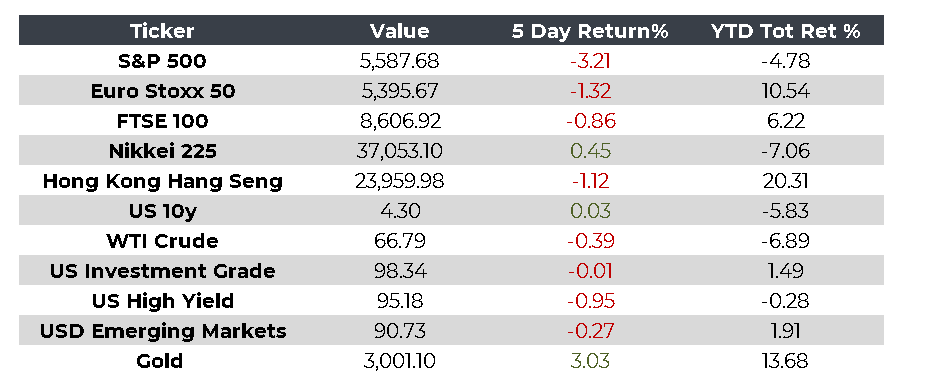
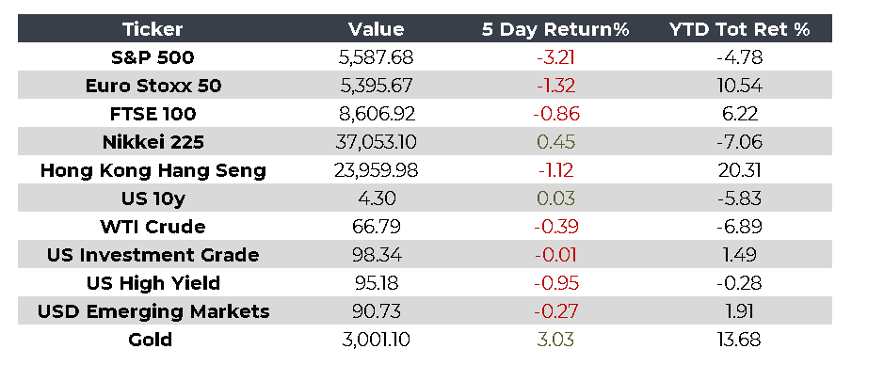
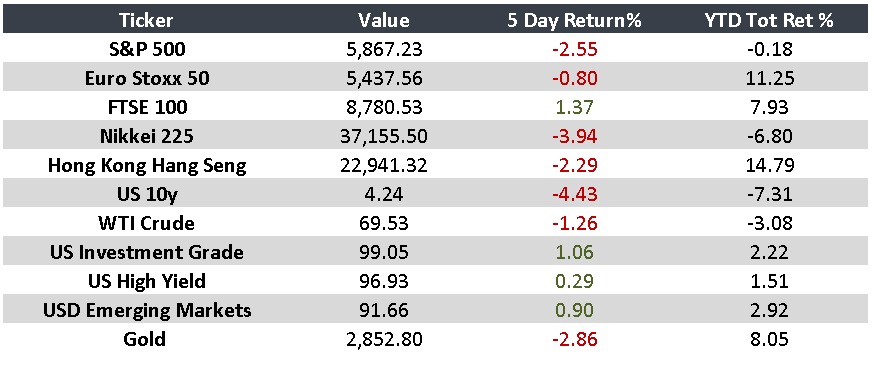
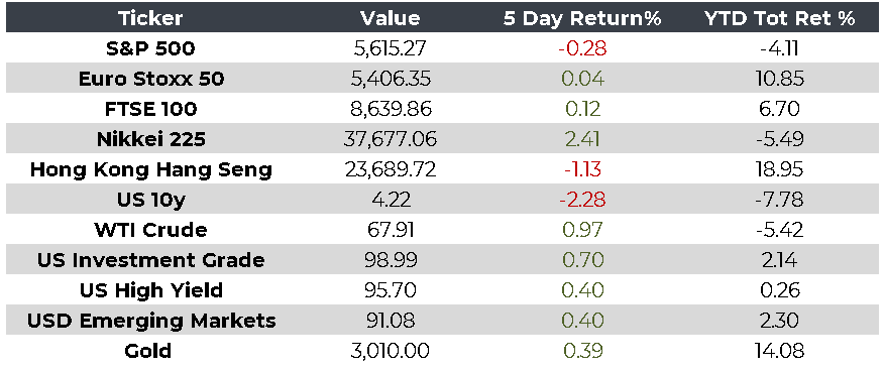
In the U.S., the S&P 500 and Nasdaq are down 4% and 9% year-to-date (YTD), respectively, affected by monetary and tariff uncertainty. In contrast, the Euro Stoxx 50 has risen 12% amid the potential for a peace agreement in Europe, while China has rebounded by 24% due to stimulus measures and improved outlooks. 

Monetary policy and valuation 

In terms of monetary policy, U.S. inflation remains above the Fed’s target, prompting the market to adjust expectations, with between one and two 25 basis point (bps) rate cuts anticipated in 2025. Additionally, the S&P 500 valuation remains high, with a forward P/E of approximately 20.7x. 

Strategy and positioning 

We maintain our positive tactical stance on large-cap equities, although we anticipate episodes of volatility due to market sensitivity to tariffs and high valuations. 

Key events to watch: 

  • Tariff policies under Donald Trump’s new administration. 
  • Inflation trends and potential benchmark rate cuts ahead. 

New economic outlook: Inflation, tariffs, and key market changes 

Inflation, tariffs, and leadership changes have shaped the global economic agenda in recent weeks. 

Policy shifts, inflation, and trade regulations remain in the market spotlight. 

Markets continue to monitor changes in economic policy, inflation, and trade restrictions across various countries. Here are the key events: 

  • United States | President Trump stated that the country is undergoing an “economic transition” aimed at building a strong economy. Additionally, 25% tariffs on steel and aluminum imports took effect. Inflation showed signs of slowing, with a 0.2% monthly increase in February, bringing the annual rate to 2.8%. 
  • Europe | The European Union announced retaliatory tariffs on U.S. products totaling $28.3 billion, set to take effect in April. Meanwhile, Ukraine agreed to a 30-day ceasefire brokered by the U.S. 
  • Japan | Q4 2024 GDP was revised downward, showing annualized growth of 2.2%, lower than the initial 2.8% estimate. 
  • China | Consumer inflation fell by 0.7% in February, turning negative for the first time in over a year, reflecting deflationary pressures. 
  • Brazil | The Minister of Planning warned that the government will need fiscal adjustments by 2027, creating a “window of opportunity” for short-term reforms. 
  • Mexico | Following the resignation of Rogelio Ramírez de la O, Edgar Amador Zamora was appointed as the new Finance Secretary, tasked with strengthening the economy and investment. Additionally, Moody’s downgraded the outlook for the Mexican banking sector from positive to negative due to the economic slowdown and trade tensions with the U.S. 

Market volatility continues to shape financial trends. We will remain vigilant in monitoring these changes and their impact on investments. 


Key Events in the Coming Weeks 

  • March 17: Retail sales data release in the U.S. 
  • March 19: Federal Reserve Monetary Policy announcement in the U.S. 

Monitor 

Inflation eases in February

U.S. inflation slowed in February as markets await the Fed’s next move. 

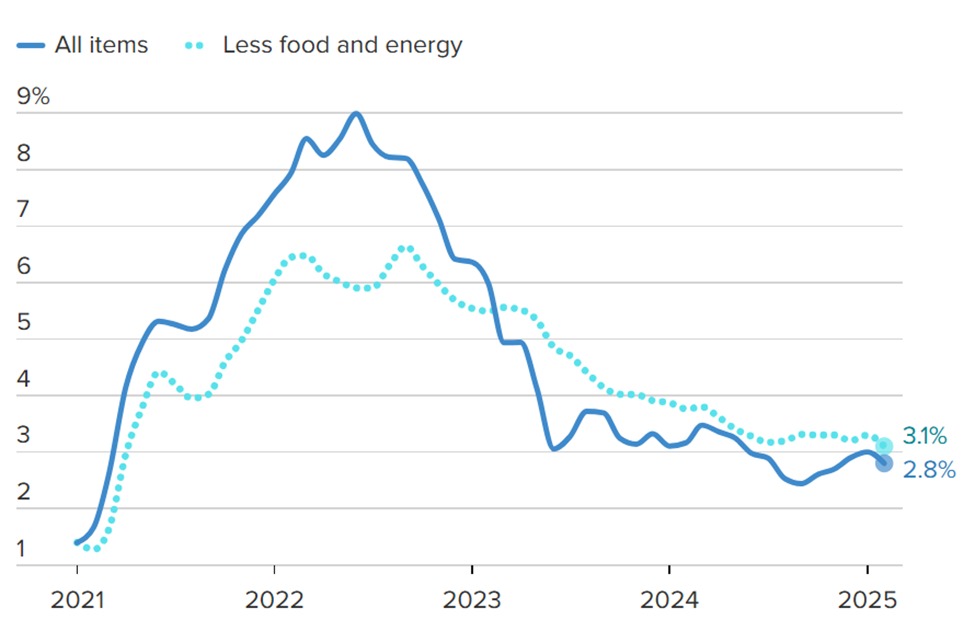
In February, U.S. inflation showed signs of slowing. The Consumer Price Index (CPI) rose 0.2%, bringing the annual rate down to 2.8%, lower than January’s 0.5% increase. 

  • Core CPI (excluding food and energy) grew 0.2% month-over-month and 3.1% year-over-year. 
  • Shelter, which accounts for one-third of the CPI, increased 0.3% monthly and 4.2% annually. 
  • Food and energy prices rose 0.2%, used vehicle prices increased 0.9%, and apparel climbed 0.6%. 
  • Egg prices surged 10.4% in February, accumulating a 58.8% increase over the past year. 

Market implications: 

The Federal Reserve is closely monitoring inflation and the new 25% tariffs on aluminum and steel. Markets expect the Fed to begin rate cuts in May, with a cumulative 0.75 percentage point adjustment by the end of 2025. However, in its next meeting, the Fed is expected to keep rates steady between 4.25% and 4.5%. 

Consumer Price Index (CPI) and core CPI (excluding food and energy). 
Annual percentage change. Jan. 2021–Feb. 2025.

Source: CNBC

Key Market Movements: Inflation, Tariffs, and More

Tariffs, inflation, and interest rates continue to shape the global economy.

Key market movements: Inflation, Tariffs, and More.

Global markets are experiencing significant shifts in monetary policies, employment, and international trade. Below is a summary of the most relevant developments:

  • United States: The manufacturing sector remains in mild expansion, while employment rose by 151,000 thousand jobs, and the unemployment rate held steady at 4.1%. A 25% tariff on Canadian imports and a 10% tariff on Chinese products took effect, though some exemptions may apply in the coming months. Mexico secured an exemption for USMCA-listed products until April 2.
  • Europe: Inflation in the eurozone fell to 2.4% year-over-year, but economic activity remains stagnant. The ECB cut its benchmark rate to 2.5%, marking six reductions since last June.
  • Japan: Corporate investment spending contracted by 0.2% year-over-year in Q4 2024, the first decline in nearly four years.
  • China: New tariffs of up to 15% on U.S. products will take effect on March 10. Additionally, the government set its GDP growth target at “around 5%” and announced further fiscal stimulus.
  • Brazil: Annual inflation is projected to close at 5.65%, with the benchmark rate expected to reach 15% this year.
  • Mexico: Remittances totaled $4.66 billion in January, reflecting a 10.8% monthly decline.

We will continue to monitor these events and their impact on the markets.


Important events in the coming weeks:

  • March 10: Inflation data will be released in China.
  • March 12 Inflation figures will be released in

Monitor


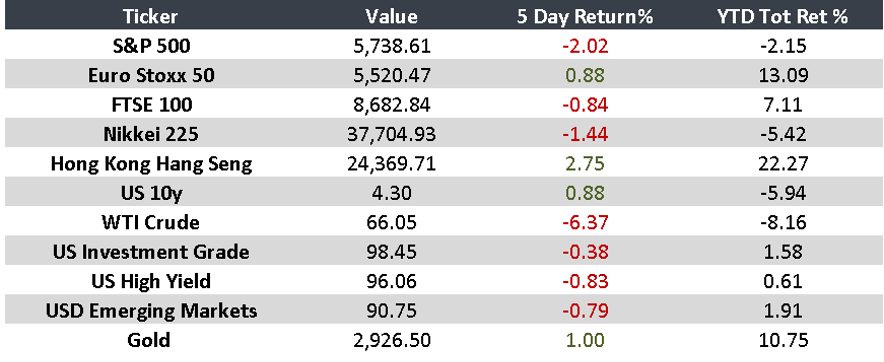
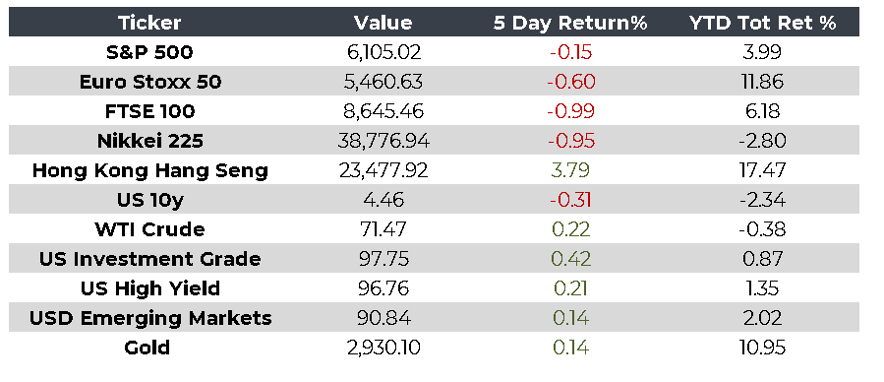
* Due to internal logistics reasons, the yields and prices are presented with the closing of March 6.

Key Takeaways from Warren Buffett’s 2024 letter 

Buffett highlights Berkshire’s performance, liquidity strategy, and growth in Japan.

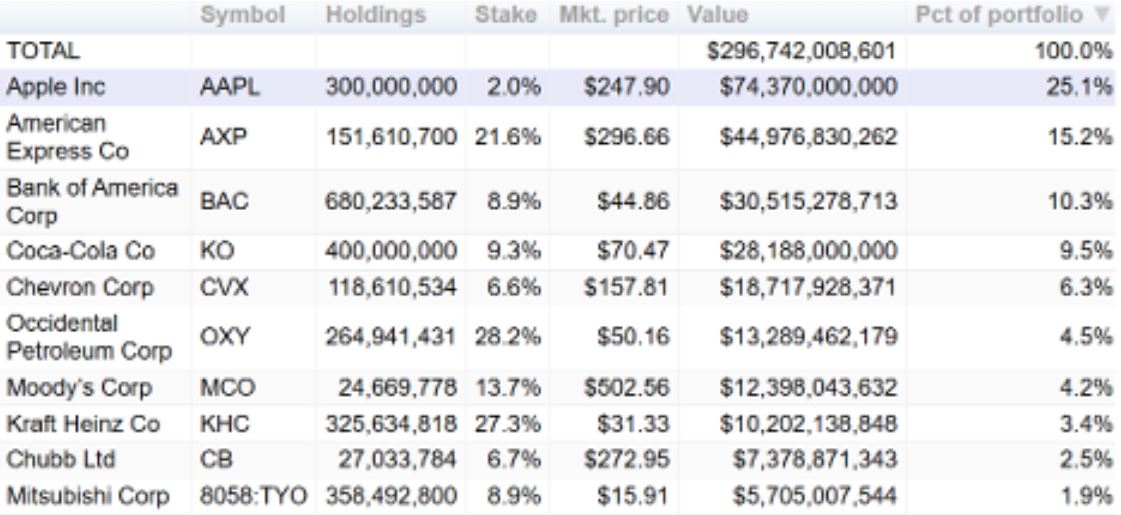
Warren Buffett’s highly anticipated annual letter is here, and as always, there’s plenty to analyze. In 2024, Berkshire Hathaway reported an operating profit of US$47 billion, a 27% increase despite more than half of its businesses experiencing a decline in earnings. 

  • Liquidity Strategy: Berkshire ended the year with US$334 billion in cash. Despite speculation, Buffett reaffirmed that his focus remains on stock investments. 
  • Beyond the U.S.: Berkshire continues to expand its presence in Japan, with investments in five major conglomerates. 
  • Insurance Sector on the Rise: Operating profits in insurance grew 66% year-over-year, solidifying this business as the cornerstone of the firm. 

Buffett expressed optimism about the future of American businesses. While he didn’t directly address his retirement, he acknowledged that Greg Abel’s leadership transition is approaching. 

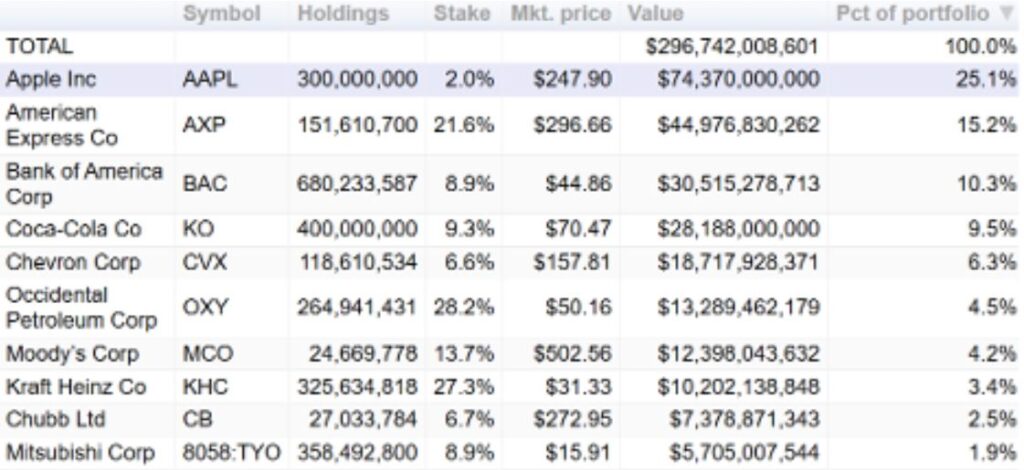
Top 10 holdings in Berkshire Hathaway’s investment portfolio 

*Figures as of December 31, 2024 – Cash position: US$334 billion.  

Source: CNBC 

Markets in motion: Inflation, tariffs, and elections 

Key data of the week: inflation, economic growth, trade policies, and political developments worldwide. 

This week, markets focused on inflation, economic growth, and trade policies. Here are the key developments across regions: 

  • United States: Consumer confidence fell in February to its lowest level since 2021. Q4 2024 GDP grew at an annualized rate of 2.3%, driven by strong personal consumption (4.2%). Trump announced—and later reversed—tariffs on Mexico and Canada, now set to take effect on March 4. PCE inflation, closely monitored by the Fed, stood at 2.6% year-over-year. 
  • Europe: In Germany, the center-right bloc won the elections, with Friedrich Merz set to become the new chancellor. Trump also proposed a 25% tariff on European Union products, including cars and semiconductors. 
  • Japan: Inflation in the services sector rose to 3.1% year-over-year in January, reinforcing expectations of further interest rate adjustments. 
  • China: Analysts expect housing prices to decline by 2.5% in 2024, with a slow recovery anticipated in the coming years. 
  • Brazil: February inflation increased to 4.96% year-over-year, the highest since October 2023. However, the country surprised with the creation of 137,300 formal jobs, significantly exceeding expectations. 
  • Mexico: Inflation in the first half of February reached 3.74%, accelerating from late January. Additionally, the government is considering potential tariffs on Chinese products in response to U.S. trade policy. 

We’ll continue to monitor these developments and their impact on the markets. 


Important events in the coming weeks: 

  • March 3: In the United States, the ISM Manufacturing Index will be released. 
  • March 7: In the United States, employment figures will be announced.

Monitor

What are tariffs and how do they work?

Tariffs are on investors’ radar due to their impact on the economy and markets.

Now more than ever, tariffs are a key topic in the global economy. Not only do they affect inflation and corporate profitability, but they have also become tools for political negotiation.  

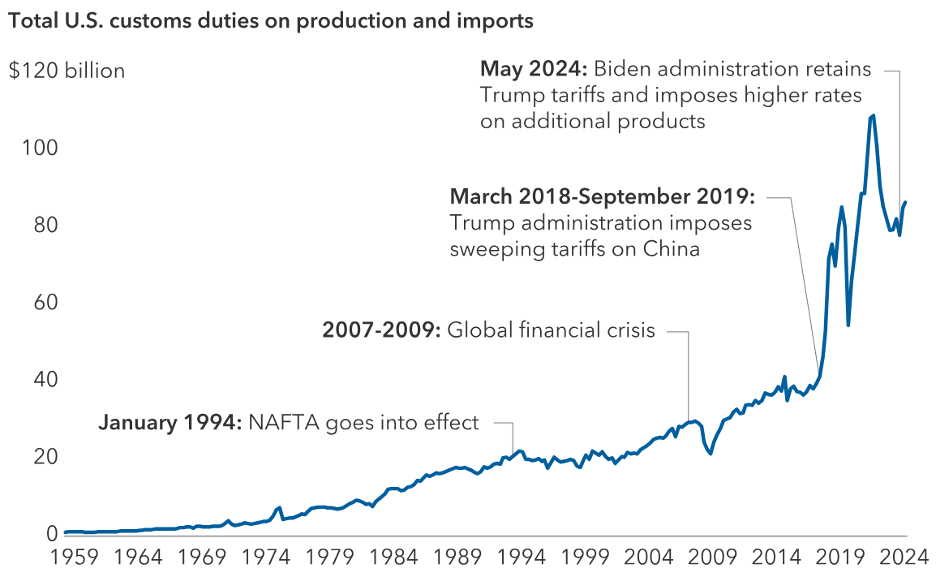
Since his campaign and now in his administration, Donald Trump has pushed for tariffs on imported goods from China, Canada, and Mexico, aiming to protect U.S. industry and reduce the trade deficit. However, these measures can have side effects such as trade tensions and rising consumer prices. 

🔹 What are tariffs? Tariffs are taxes imposed by governments on imported goods to make them more expensive and encourage the purchase of domestic products. They can also be used to generate revenue or as a political pressure strategy. 

🔹 How do they work? When a country imposes a tariff, the importing company pays the tax, either absorbing the cost or passing it on to the end consumer through higher prices. 

🔹 Impact on businesses: As production costs rise due to more expensive materials, companies often increase their product prices, affecting both businesses and consumers. 

In a nutshell, tariffs can benefit certain local industries but also make products more expensive and impact the global economy. Staying informed is key to making strategic financial decisions in response to these changes. 

Trade barriers: U.S. tariffs have risen significantly in recent years. 

Source: Capital Group

Economic Update: Rates, Tariffs, and Growth 

Below are some key points that reflect the current economic landscape in different regions: 

  • United States: The Fed’s minutes show that members require further inflation reduction before lowering rates again. Governor Michelle Bowman emphasized the need for more data confirming inflation progress. Meanwhile, President Trump announced the possibility of imposing 25% tariffs on imports of automobiles, semiconductors, and pharmaceuticals starting April 2. 
  • Europe: Geopolitical tensions escalated after U.S. talks with Russia about a potential peace agreement in Ukraine, excluding Kyiv and the EU. In the UK, inflation reached 3% year-over-year, the highest in 10 months, surpassing the 2.8% expectation, driven by smaller drops in airline fares and higher fuel prices. 
  • Japan: The economy accelerated in Q4 2024 with an annualized growth of 2.8%, surpassing the 1% forecast, driven by higher consumer spending and increased CAPEX. Exports in January grew 7.2% year-over-year, led by the automotive sector oriented toward the U.S. 
  • China: President Xi Jinping reaffirmed his support for the private sector and urged companies to “show their talent.” The People’s Bank kept the one-year reference rate at 3.10% and the five-year rate at 3.60%. 
  • Mexico: The Bank of Mexico reported that international reserves reached $232.724 billion, the highest level since 1995. However, the growth forecast for the year was revised down to 0.6% (from 1.2%) due to lower consumption and private investment. Preliminary figures indicate a 1.8% year-over-year growth in January, with only a 0.1% monthly increase. 

These events and figures will be essential for understanding the current economic context and its possible repercussions. If you would like more information or wish to discuss how these factors might impact your investment strategies, we are at your disposal. 


Important Events in the Coming Weeks 

  • In the U.S., the second revision of Q4 2024 GDP will be released on 02/27 
  • In the U.S., the PCE inflation data, closely followed by the Fed, will be released on 02/28 

Monitor 

Ponte en contacto con nosotros

Receive the best financial market news

Cookie Policy

We use our own and third party cookies to improve our services and show you advertising related to your preferences, by analyzing your browsing habits. By continuing, you confirm that you have read and accept this policy.