Uriel Loredo

A new round of tariffs and mixed inflation signals shape the global economic agenda. 

Markets focus on trade decisions and mixed growth signals 

Amid a week marked by trade tensions and uneven economic data, here are the key highlights investors will be closely monitoring: 

• United States 
President Trump announced a 25% tariff on products from Japan and South Korea, effective August 1. For Canada, the tariff would be 35%. He also imposed 50% tariffs on copper imports and goods from Brazil. 
The Fed’s minutes revealed divided views on the timing and scale of potential rate cuts. 
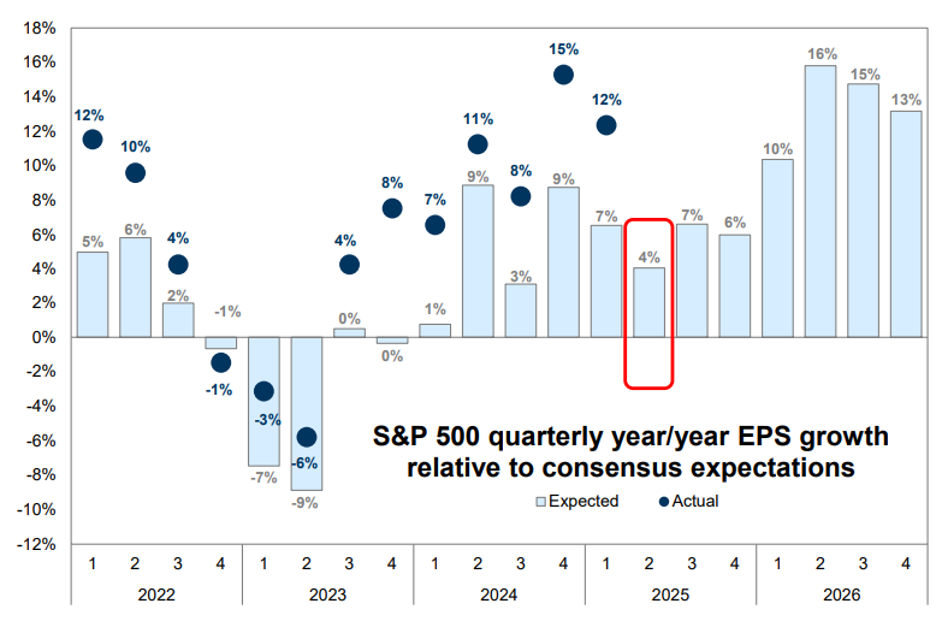
Q2 2025 earnings season kicks off, with S&P 500 EPS growth expected at just 4%. 

• Europe 
Germany’s industrial production rose 1.2% month-over-month in May, driven by the automotive and energy sectors. However, exports fell 1.4% month-over-month, including a 7.7% drop in shipments to the U.S. 
The Bank of England highlighted the UK economy’s resilience despite ongoing geopolitical risks. 

• China 
Inflation rose 0.1% year-over-year in June, marking the first increase in five months. However, producer prices fell 3.6% annually, the lowest level since July 2023. 

• Brazil 
The government is planning a return to international debt markets by year-end, following two successful bond issuances this year. 
President Lula responded to U.S. tariffs by announcing 50% tariffs on American products. 

• Mexico 
Headline inflation eased to 4.32% in June, while core inflation ticked up slightly to 4.24%. 
Auto production hit a record high in June, posting 4.8% year-over-year growth. 

“History offers a crucial insight about market crises: they are inevitable, painful, and ultimately surmountable.” — Shelby M.C. Davis 


Important events in the next week 

  • U.S. inflation data – 07/15 
  • U.S. industrial production – 07/16 

Monitor 
“One Big Beautiful Bill Act”: Key Changes and Potential Impact 

Congress has approved President Trump’s fiscal package, officially named the “One Big Beautiful Bill Act” (OBBBA). The proposal includes bold tax adjustments that could significantly impact both economic growth and the country’s fiscal stability. 

Here are the main highlights: 

Taxes and Deductions 

  • The 2017 tax cuts are made permanent. 
  • New deductions of up to $25,000 for income from tips and overtime will apply through 2028. 
  • A temporary increase in the SALT deduction cap to $40,000 is introduced for households earning under $500,000. 

Cuts to Social Programs 

  • Funding for Medicaid and SNAP is reduced, and new work requirements are introduced. 
  • In total, food assistance programs are projected to be cut by $186 billion. 

Other Measures 

  • Defense and border security spending increases (around $150 billion each). 
  • Tax incentives for green energy are eliminated. 
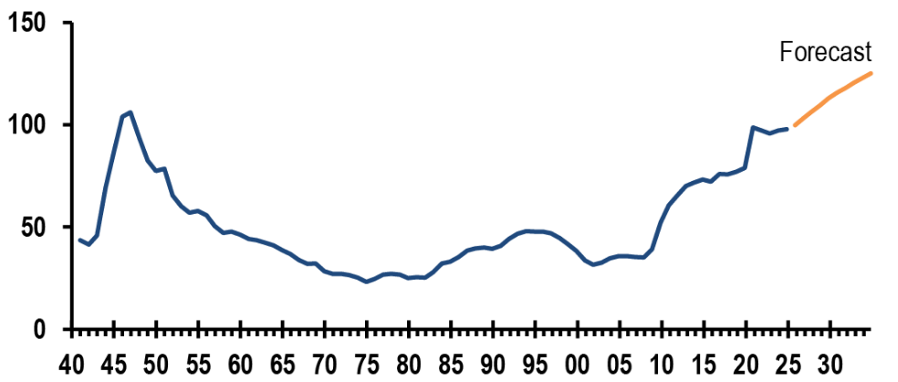
    According to the CBO, the package could add $2.8 trillion to the deficit over the next decade. Public debt would rise from 98% to 125% of GDP. This could prompt credit rating agencies to reassess the U.S. sovereign rating. 

Market Implications:

The approval of this fiscal package may push Treasury yields higher as concerns grow over the deficit and rising debt issuance. If inflation picks up, the Fed may delay rate cuts—posing challenges for both bonds and equities. 

Public Debt-to-GDP Trend (%) 

Source: JP Morgan 

Solid employment, tax reform, and new trade deals dominate the global agenda. 

Week of June 30 – July 3 

A short week marked by new trade agreements and mixed economic data across major markets. 

Robust employment, tax reform, and mixed global signals 
Here are the most relevant developments from the international scene this week: 

• United States 

  • Nonfarm payrolls surprised to the upside, with 147,000 new jobs added in June, beating expectations of 110,000. The unemployment rate dropped to 4.1%.
  • The Senate approved President Trump’s fiscal plan, which includes new deductions and extends the 2017 tax cuts.  
  • A new trade agreement was announced with Vietnam. 

• Europe 

  • Eurozone inflation rose slightly to 2% year-over-year, in line with expectations. 
  • The European Union signaled willingness to accept a general 10% tariff if the U.S. reduces duties in key sectors such as alcohol, semiconductors, and pharmaceuticals. 

• China 

  • Manufacturing activity contracted for a third consecutive month, though at a slower pace. 
  • The services sector grew at its slowest rate in nine months, amid weakening demand and fewer new orders. 

• Brazil 

  • The Central Bank indicated that recent easing in inflation may allow for a reassessment of its monetary stance. The Selic rate remains at 15%, its highest level since 2006. 

• Mexico 

  • Banxico highlighted the strength of the financial system following the intervention of three institutions under investigation for alleged money laundering. 
  • Remittances totaled US$5.36 billion in May, a 4.6% year-over-year decline. 

“An investment in knowledge pays the best interest.” — Benjamin Franklin 


KEY UPCOMING EVENTS 

  • United States: FOMC minutes release – 07/12 
  • China: June inflation report – 07/09 

Monitor 

2Q25: Slower Earnings Growth and Margin Pressure for the S&P 500 

After the S&P 500 hit new highs, the focus is now on Q2 earnings season. Here are the key takeaways: 

  • Earnings kickoff: Big banks like Citigroup, JPMorgan, and Wells Fargo will kick things off on July 15. By early August, over 70% of the index will have reported. 
  • Earnings slowdown: S&P 500 EPS growth is expected to come in at +4% year-over-year—much lower than the 12% seen in Q1. Revenue growth is also set to slow to +4%, and margins are under pressure, falling from 12.1% to 11.6% quarter-over-quarter. 
  • Sector impact: Earnings in Energy are expected to drop by 28%, with Materials and Consumer Discretionary down 7%. On the flip side, Tech and Communication Services are leading the pack with gains of 18% and 28%, respectively. 
  • Tariff effect: New tariffs, which rose from 3% to 13%, are starting to make an impact. While companies haven’t fully passed the added cost to consumers yet, margin pressure is becoming more visible in the most exposed sectors. 
  • Full-year outlook: Analysts have trimmed their 2025 earnings forecasts for the S&P 500 by 2%, now expecting +7% growth for the year. A stronger recovery is projected for 2026, with growth around +14%. 

Market takeaway: 

Earnings growth is cooling and margins are feeling the squeeze. Still, lower expectations could leave room for upside surprises. 

Source: Goldman Sachs 

Geopolitical Easing and Mixed Global Growth Signals 

Rate cut in Mexico, potential stimulus in China, and caution from the US defined the week. 

Investors closely watching monetary policy, oil prices, and inflation. A week marked by rate adjustments, mixed economic signals, and easing geopolitical tensions 

This week brought key developments in monetary policy, economic growth, and geopolitics. Here’s a country-by-country summary of the most relevant updates: 

  • United States: Former President Trump announced a ceasefire between Iran and Israel, easing oil prices. Fed Chair Jerome Powell reaffirmed the likelihood of holding interest rates steady as tariff impacts are assessed. Q1 2025 GDP contracted by 0.5%, a deeper decline than expected, and consumer confidence fell again.  
  • Europe: The Eurozone continues to show lackluster growth, though Germany posted signs of a manufacturing rebound. In the UK, the composite PMI edged up slightly due to improved new orders. 
  • China: Citi raised its 2025 growth forecast to 5%. A new fiscal stimulus package worth approximately $70 billion is expected.
  • Brazil: The Central Bank signaled a pause in its tightening cycle to assess the cumulative impact of previous rate hikes. 
  • Mexico: Banxico cut the benchmark rate to 8%. Inflation rose to 4.51% year-over-year in the first half of June. The government issued $6.8 billion in debt maturing in 2032 and 2038. 

“Discipline is what separates an investor from a gambler.” – Peter Lynch 


KEY EVENTS TO WATCH 

  • July 1 – US ISM Manufacturing Index release  
  • July 4 – US markets closed in observance of Independence Day 

Monitor 

Middle East Tensions Raise Risks – But Oversupply Could Keep Prices in Check 

Geopolitical Tensions on the Rise: What’s the Impact on Oil Markets? 

A ceasefire was recently reached between Israel and Iran, yet tensions flared again after the U.S. launched airstrikes on Iranian nuclear sites. In response, Iran threatened to close the Strait of Hormuz—a key passage for global oil shipments. 

Here are three key points to help put the situation into perspective: 

Limited Immediate Impact: Iran accounts for only 3% of global crude supply and exports just half of that. Shutting down Hormuz would hurt its own economy. 

Strategic Reserves Are Ready: OECD countries hold 1.2 billion barrels in reserves—enough to cover up to 60 days of exports through Hormuz. 

Oversupply Ahead: Global demand is expected to grow by less than 1% this year, while supply could grow more than three times as fast, driven by Brazil, Norway, and adjustments in OPEC+ output. 

Market Implications 

S&P 500 companies have very limited direct exposure to Iran and Israel. In the short term, market sentiment may drive volatility. But from a broader perspective, oil market fundamentals remain relatively balanced. 

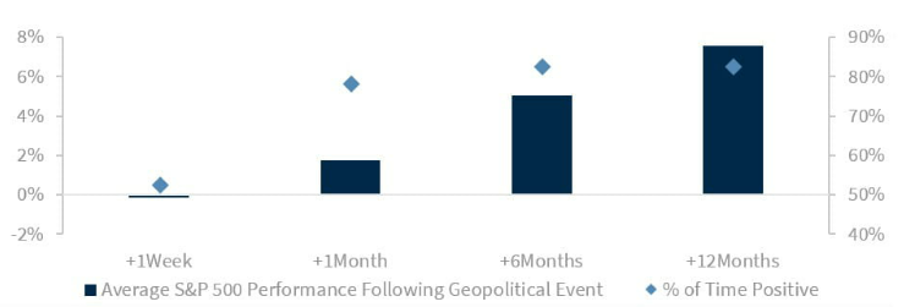
Over the past 30 years, markets have shown resilience. Following similar geopolitical events, the S&P 500 has delivered an average return of nearly 8% over the next 12 months. 

Source: Raymond James 

Fed holds rates steady, Middle East tensions rise, and global growth signals remain mixed  

Economic Radar 

A week of contrasts: mixed signals across growth, interest rates, and geopolitics 

This week was shaped by key central bank decisions, contrasting economic indicators, and renewed geopolitical tensions. Below is a summary of the most relevant developments by region: 

  • United States: The Fed held its benchmark rate at 4.25%–4.50% and revised its projections: GDP growth was lowered to 1.4% (from 1.7%) and core inflation was raised to 3.1% (from 2.8%). While two rate cuts remain on the table for 2025, seven members now forecast no changes. In parallel, retail sales fell 0.9% month-over-month, and Middle East tensions pushed oil prices higher following evacuation orders issued by Trump in Tehran. 
  • Europe: The ECB maintained a flexible stance without committing to further cuts. In the UK, annual inflation stood at 3.4%, in line with expectations. The Bank of England kept its rate at 4.25%, signaling potential cuts if conditions allow. 
  • China: The PBOC left benchmark rates unchanged. Retail sales surprised to the upside (+6.4% YoY), and industrial production grew 5.8% YoY. 
  • Brazil: The Central Bank raised the Selic rate to 15%, marking the seventh consecutive hike. Authorities anticipate elevated financing costs for longer to contain inflation, projected at 4.9% for 2025. 
  • Mexico: Investment fell 4% quarter-over-quarter in Q1 2025, marking the second consecutive decline. The IMEF projects the economy won’t regain momentum until 2027, amid uncertainty surrounding the judicial reform and USMCA renegotiation. 

In a highly uncertain environment, discipline and analysis remain the foundation of a sound investment strategy. 


KEY UPCOMING EVENTS 

  • In the United States, Powell will present his semiannual monetary policy report 06/24 
  • In the United States, GDP data will be released 06/26 

Monitor 

The Fed holds rates steady and keeps rate-cut outlook, but revises growth down. 

Fed sticks with rate cut outlook, but lowers growth forecast. 


As expected, the Federal Reserve kept its interest rate unchanged at 4.25%-4.50%. While uncertainty has eased somewhat, the Fed emphasized that lingering risks still call for a cautious approach. 

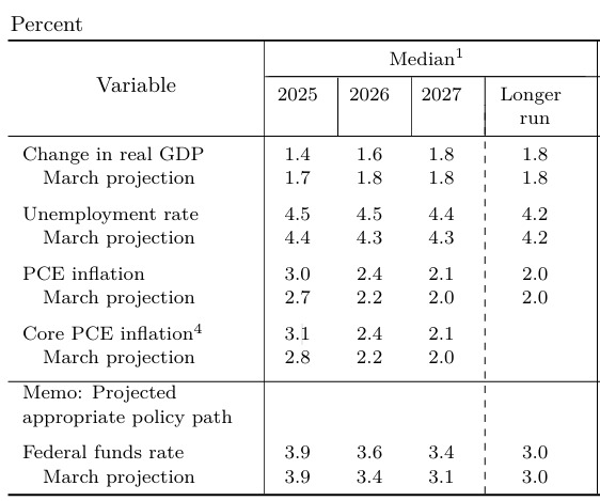
The latest dot plot shows that expectations for two rate cuts in 2025 remain. However, seven members of the Committee now anticipate no rate cuts in 2025. The Fed also revised its GDP growth forecast downward to 1.4% (from 1.7% in March) and raised its core inflation projection to 3.1%. 

Updated projections point to a softer labor market, with unemployment expected to reach 4.5%. No changes were announced to the Fed’s balance sheet reduction plans. 

Market Takeaway: 

The statement confirms a cautious stance in response to slower growth, tariff pressures, and lingering inflation risks. While rate cuts are still in the forecast, the Fed acknowledges that balancing growth and inflation will be more challenging. 

Fed Indicators Update (June vs. March) 

Source: Federal Reserve 

Mixed trends in inflation and growth 

Mixed inflation data, downward growth revisions, and easing trade tensions between China and the U.S. set the tone for the week’s global economic narrative. 
Here’s a brief summary of the most relevant developments across major economies in recent days: 

  • United States: May inflation rose just 0.1%, staying below expectations. The Fed is not expected to cut rates before September. The World Bank lowered 2025 GDP growth to 1.4%. Gold and oil rose on geopolitical tensions. 
  • Europe: Germany raised its 2025 growth forecast to 0.3%. An ECB policymaker said interest rates are well positioned, signaling a prolonged pause as inflation continues to ease. 
  • China: Exports grew 4.8% year-over-year, but those to the U.S. fell 34.5%. Annual inflation declined, and producer prices also retreated.  
  • Brazil: Inflation reached 0.26% in May, below the 0.33% forecast. The annual rate fell to 5.32%, reinforcing expectations of a pause in the Central Bank’s rate hike cycle. 
  • Mexico: Inflation climbed to 4.42% year-over-year in the second half of May, its highest level in five months. The World Bank cut its 2025 growth forecast from 1.5% to 0.2%. 

Investing wisely isn’t about timing the market, but about staying informed, diversified, and avoiding impulsive decisions. 


KEY UPCOMING EVENTS 

  • In the United States, the Fed policy announcement will take place 06/18 
  • In the United States, Juneteenth will be observed (market closed) 06/19 

Monitor 

Market Outlook and Positioning

The expectation of fewer rate cuts and trade-policy uncertainty defined a volatile first half of the year. Recently, sentiment improved on the prospect of government agreements with its main partners. 

Key Market Highlights: 

  • Market Performance: 
    The S&P 500 and Nasdaq have reversed their April declines and now show year-to-date gains of approximately 3% and 2%, respectively. 
  • Monetary Policy & Valuation: 
    The Fed has held rates steady, reiterating that there’s no rush to resume cuts. The S&P 500’s forward P/E remains elevated at roughly 23×, versus a long-term average of 17×. 
  • Strategy & Positioning: 
    While the corporate backdrop could improve over the coming years, we have adjusted our tactical stance from positive to neutral on Large-Cap equities. 

Upcoming Events to Watch: 

  • Trade and fiscal policies under the new Trump administration 
  • Employment data releases and the potential timing of any rate cuts 
Ponte en contacto con nosotros

Receive the best financial market news

Cookie Policy

We use our own and third party cookies to improve our services and show you advertising related to your preferences, by analyzing your browsing habits. By continuing, you confirm that you have read and accept this policy.