Uriel Loredo

Global economic update: United States, Europe, and more.

Decline in consumer confidence in the U.S., interest rate cuts in China and Mexico, and more. Check out the weekly financial summary.

  • United States: Consumer confidence recorded its largest drop in three years in September. However, the economy grew at an annualized rate of 3% in Q2 2024, and unemployment claims decreased to 218,000.
  • Europe: In Germany, business activity fell to a seven-month low, and business sentiment contracted for the fourth consecutive month. The Swiss National Bank cut its interest rate to 1%.
  • Japan: Manufacturing activity slightly declined, although the services sector remained strong, supporting economic growth.
  • China: The People’s Bank of China lowered interest rates and implemented another round of significant stimulus to bolster the economy.
  • Mexico: The Bank of Mexico cut the benchmark rate to 10.5%. Inflation continued to slow, and the economy grew by 2% year-on-year in July, driven by the primary sector.

Important Events in the Coming Weeks

  • In the United States, ISM manufacturing and services indicators will be released on 10/01 – 03.
  • In the United States, employment figures will be announced on 10/04.

Monitor
What do rate cuts tell us about the future?

The wait is over. After four years, the Federal Reserve has cut its benchmark rate by 50 base points, bringing it to a range of 4.75% to 5.00%. This move could signal a new direction for markets in the coming months. However, for investors with a long-term strategy, these events are only part of the noise.

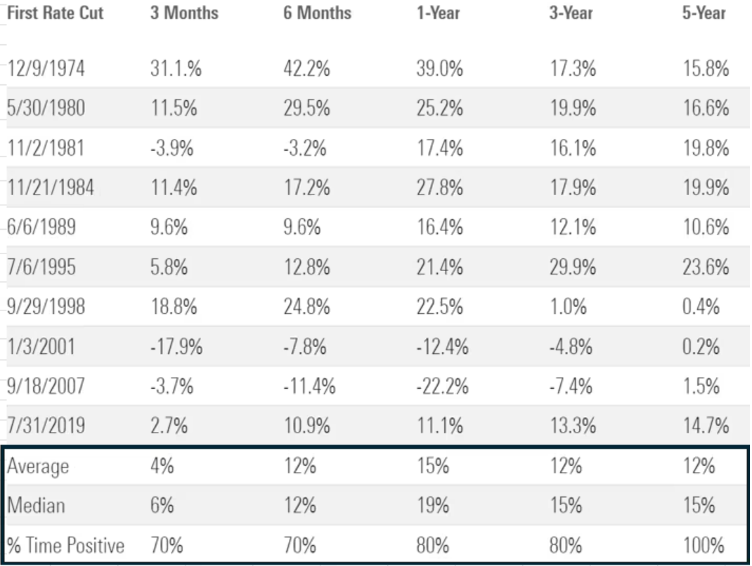
Here’s a look at the historical performance of markets following the first rate cut:

  • Positive performance in the past: Since 1974, the S&P 500 has shown positive returns 80% of the time in the 12 months following the first rate cut, with an average return of 15%. Over three years, the average return is 12%.
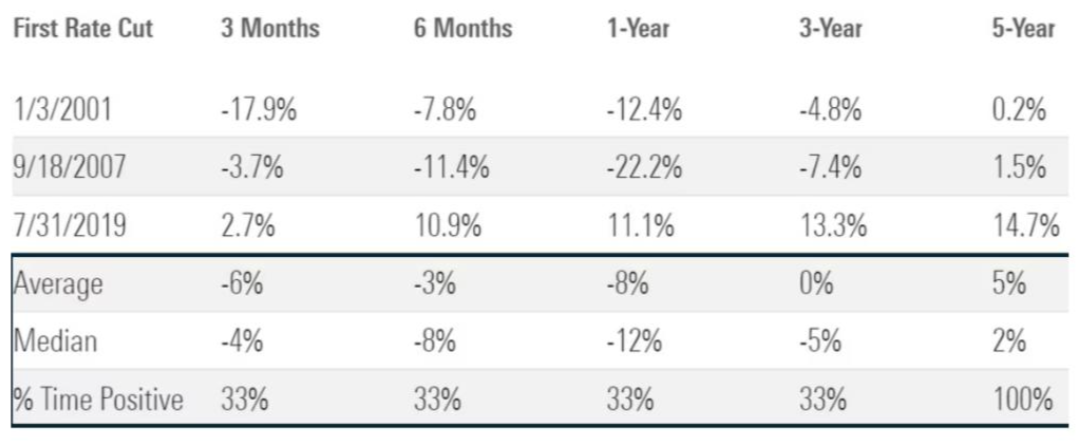
  • Caution in recession scenarios: If the rate cut is accompanied by a recession, as happened in 2001, 2007, and 2019, the S&P 500 fell by an average of 8% in the following 12 months. Over three years, it remained stable.
  • More optimistic scenario: In an environment of rate cuts without a recession, markets have generated an average return of 22% in the first 12 months and 15% over three years.

In summary, while there is still debate about whether we will see a recession, it’s important to remember that extending your investment horizon increases the probability of achieving your goals.

Future Returns of the S&P 500 After a Rate Cut

  • Past performance does not guarantee future results.

Source: Morningstar

Future Returns of the S&P 500 After a Rate Cut + Recession

  • The data excludes easing cycles in 1974, 1980, and 1981, as recessions were already underway when the Fed made the first cut. Past performance does not guarantee future results.

Source: Morningstar

Weekly Summary: Major Developments in the Economic and Financial Landscape

The dynamism of global finance and markets never slows. Below is an overview of the most important events:

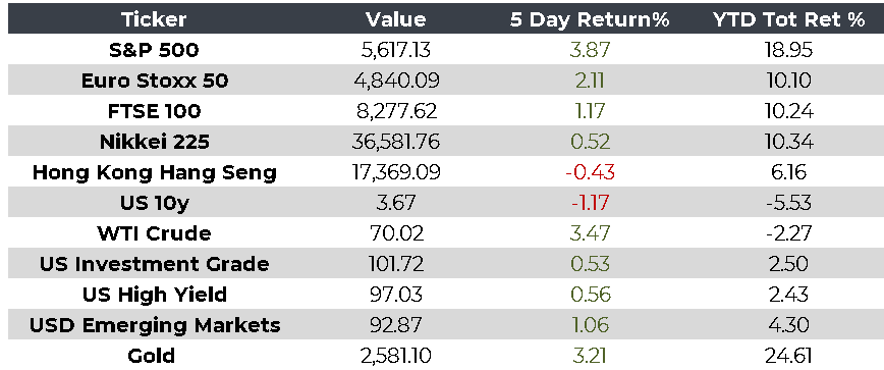
  • United States: In August, retail sales grew 0.1%, with online sales leading with 1.4%. The Fed made an aggressive move, cutting the interest rate by 50 basis points, bringing the target range to 4.75% – 5.0%.
  • Europe: The Bank of England kept rates steady at 5%. In the UK, overall inflation stood at 2.2%, while inflation in the services sector reached 5.6%.
  • Japan: Export growth slowed to 5.6%, driven by weaker shipments to the United States.
  • Argentina: The economy contracted by 1.7% in Q2, marking the third consecutive quarterly decline, despite growth in the agricultural sector.
  • Brazil: The Central Bank raised the Selic rate by 25 basis points to 10.75%, with further increases expected to curb inflation.
  • Mexico: The IMEF downgraded its GDP growth forecast to 1.5% for 2024 and 1.3% for 2025.

Important Events in the Coming Weeks

  • In the United States, several Fed members will deliver speeches from September 23 to 26.
  • The latest revision of Q2 2024 GDP for the United States will be released on September 26.

Monitor

Fed’s Monetary Policy Statement 

With inflation figures moving closer to the target and a noticeable slowdown in job growth, the Federal Reserve (Fed) decided to lower the benchmark interest rate by 50 basis points (bps). This significant move had not been seen since the emergency rate cuts during the COVID-19 pandemic in 2020. Outside of those emergency situations, the last time the Fed made a cut of this size was in 2008 during the global financial crisis. The market had expected this decision, though there was some debate over whether the cut would be 25 or 50 bps. As a result of this change, the federal funds rate range is now 4.75–5.0%. 

The Fed’s statement noted that recent indicators show the economy continues to grow at a steady pace. Job growth has slowed, and the unemployment rate has inched up slightly but remains low overall. Inflation is progressing toward the Fed’s 2% target but remains somewhat elevated. In the future, when considering rate adjustments, the Fed will carefully assess incoming economic data, evolving conditions, and the overall balance of risks. 

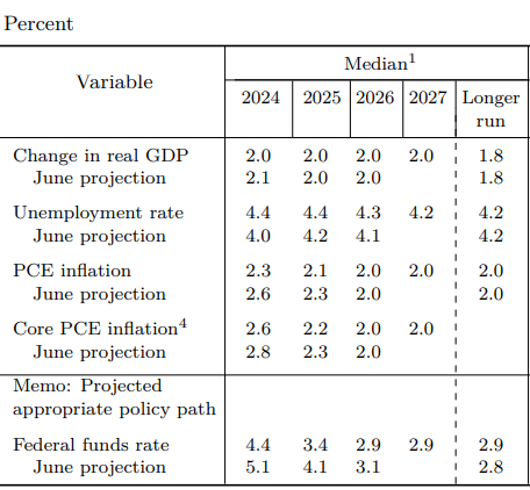
Additionally, the Fed updated its economic forecasts, making some adjustments for the remainder of this year and next year. They now expect the federal funds rate to average around 4.4% by the end of 2024, down from the 5.1% projected in June, suggesting another potential 50 bps cut. By 2025, they project the rate to be around 3.4%, lower than the previously estimated 4.1%. Economic growth expectations remain steady, near 2% for this year and 2025. However, the unemployment rate forecast has been revised up to 4.4% (currently at 4.2%) from the 4% estimated in June. For 2025, the unemployment rate is expected to stay at this level. 

Finally, the core inflation forecast (excluding volatile items like food and energy), measured by the Core PCE, is expected to decline to 2.6%, down from the previous estimate of 2.8%, and to reach 2.2% by the end of next year. 

Update of FED Indicators (September vs. June)

Source: Federal Reserve

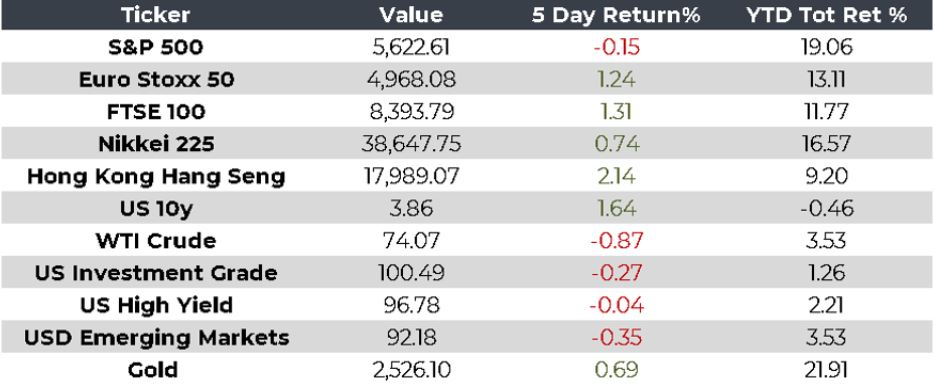
Weekly Summary: Finance and Economics

The global economy and finance have experienced significant movements in recent days. Here’s a summary of the most relevant events:

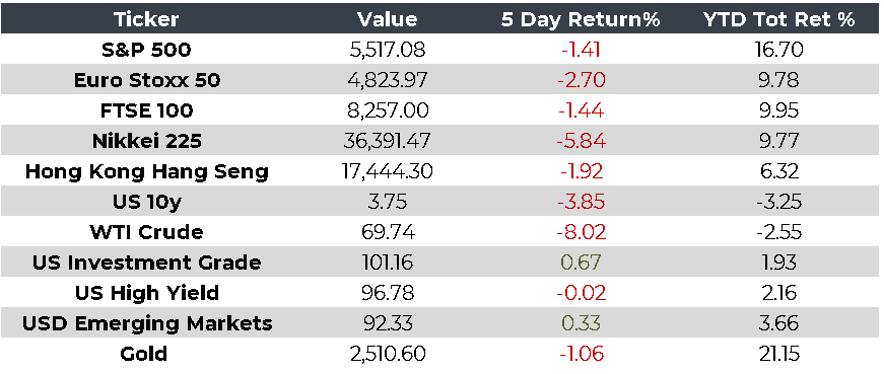
  • In the U.S, August inflation was in line with expectations and reached its lowest level since February 2021.
  • Monetary easing in Europe, with no clarity on the next move. The ECB cut its benchmark interest rate by 25 base points for the second time, placing it at 3.5%.
  • In China, mixed economic figures, highlighting the dynamism of international trade.
  • Downward revision of economic growth in Japan due to lower corporate investment and private consumption.
  • Approval of the judicial reform in the Senate. This reform makes Mexico the first country to elect all its judges by popular vote.

Important Events in the Coming Weeks

  • In the United States, retail sales will be released on 09/17.
  • The Fed’s monetary policy announcement will be on 09/18.

Monitor:

Navigating September: Understanding seasonal market trends. 

We know that September has historically been a challenging month for the markets. While this month tends to be tricky, understanding the reasons behind this trend will allow you to be better prepared. Here are some key insights: 

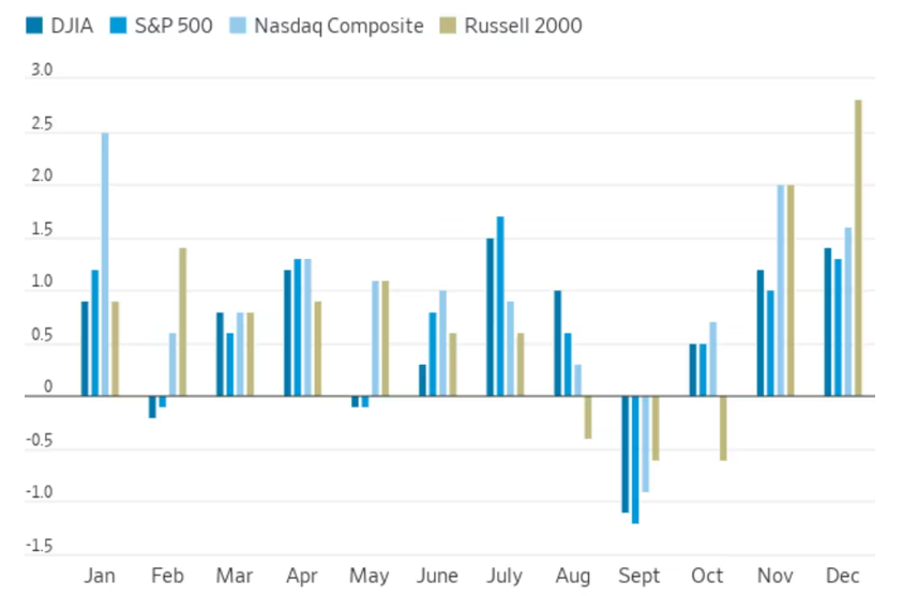
  • Market Seasonality: September has proven to be the weakest month for the stock market. Since 1928, the S&P 500 has averaged a performance of -1.2%, closing with gains only 44.3% of the time. 
  • Portfolio Rebalancing: With the year approaching its end, many institutional investors adjust their portfolios, which can increase selling pressure. 
  • Post-Vacation Volatility: The return of traders after summer often brings increased volatility. 
  • Economic Data and Geopolitics:  This month, significant economic data and monetary policy decisions are expected to influence market sensitivity. Moreover, geopolitical tensions remain present, adding uncertainty.  

In a nutshell, while September can be volatile, staying informed will help us navigate with greater confidence. 

We encourage you to continue monitoring the market and preparing for any scenario. 

Historical monthly average performance 

DJIA – Dow Jones (1897), S&P 500 (1928), Nasdaq (1971) y Russell 2000 (1987) 

Source: Marketwatch – Dow Jones Market Data 

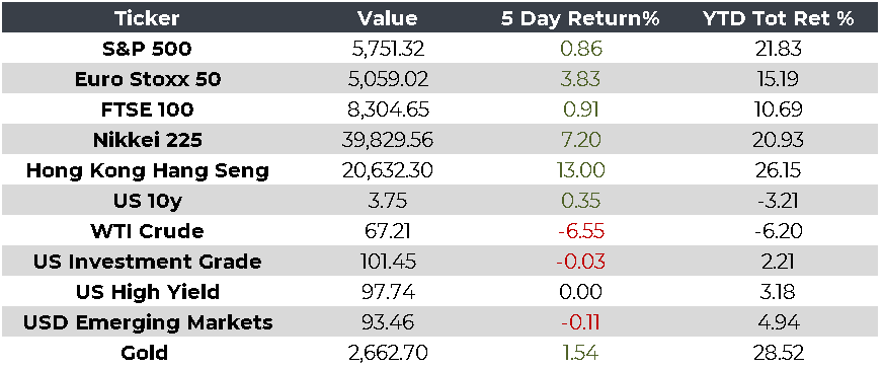
Weekly Summary: Finance and Economics

The global economy and financial markets have seen significant movements in recent days. Here’s a summary of the most relevant events:

United States:

  • Non-farm payrolls added 142,000 new jobs (less than the estimated 161,000). The unemployment rate reached 4.2%, as expected.

Eurozone:

  • Manufacturing activity remained in contraction, suggesting that the recovery might be losing momentum.

China:

  • The manufacturing sector fell to a six-month low and has recorded negative readings for four consecutive months.

Japan:

  • The Central Bank will continue to raise interest rates if the economy and inflation perform as expected.

Mexico:

  • Congress approved the constitutional reform to the Judiciary. It will now be discussed in the Senate.

Important upcoming events:

  • In the United States, inflation data will be released on 09/11.
  • ECB monetary policy announcement on 09/12.

Monitor:

Understanding the market: Keys that summer taught us.

Discover the main conclusions from recent market movements and how they might impact on your investments.

August presented us with a rollercoaster in the markets, starting with an initial correction followed by a fast recovery. However, behind this volatility lie important signals we need to consider:

Soft landing on the horizon:

  • The economy continues to show strength, but with signs of slowing down, particularly in the labor market. Nonetheless, the economy is not at risk of significant deterioration. A soft landing remains the most likely scenario.

Fed preparing to cut rates:

  • With economic growth moderating, inflation decreasing, and the labor market cooling, it’s likely that the Fed will reduce interest rates by 25 base points at its next meeting on September 16.

Solid Corporate Earnings but with Challenges:

  • S&P 500 companies reported strong earnings for the second quarter (+8% year-over-year), with interesting growth beyond the “Magnificent 7” (+4.6% year-over-year excluding this block of companies) for the first time in five quarters, but future prospects have moderated.

Volatility Ahead:

  • Negative seasonality, economic and geopolitical uncertainty, as well as upcoming elections, could increase volatility in the markets.

How can you navigate this volatile environment?

Maintaining a long-term investment strategy is crucial to overcome market storms.

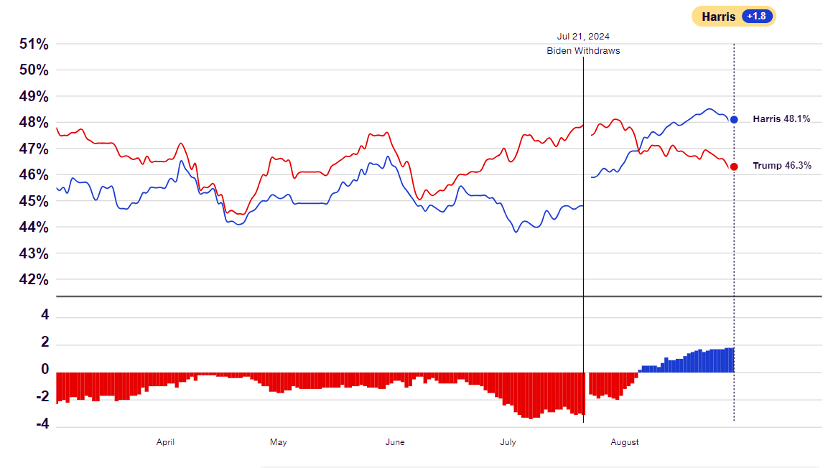
Stay informed: This is the survey outlook for the upcoming US elections

Source: RealClearPolitics

Weekly summary: U.S. grows, Germany shows mixed figures. 

Here’s this week economic outlook.

  • U.S.: With a 3% GDP growth in the second quarter and a decrease in jobless claims, consumer confidence is on the rise. 
  • Germany: Despite a drop in inflation to 2%, consumer distrust persists. With a quarterly contraction of 0.1%, Germany adjusts its economic pace. 
  • Japan: Facing inflation, the Bank of Japan remains firm on its interest rate increase stance. 
  • China: Industrial companies saw a 4.1% increase in profits thanks to high-tech manufacturing. 
  • Argentina: At risk of meeting its national debt payment, Moody’s foresees a possible restructuring. 
  • Brazil: With an annual inflation rate of 4.35% during the first half of August, the country remains close to its 4.33% estimate. The Central Bank has a new monetary policy director. 
  • Mexico: Víctor Rodríguez Padilla will be the new director of Pemex. Banxico adjusts its growth estimates to 1.5%. 

Important events next week 

United States 

  • ISM manufacturing data will be released on September 3rd. 
  • Employment indicators will be published on September 6th. 

Monitor 

Market Corrections: Turning Challenges into Opportunities.

Let’s understand market corrections and why they happen.

A market correction is defined as a decline of 5-10% in a bull market. Although these events may seem like a sudden storm, they are a natural part of market cycles.

Corrections can be triggered by various factors, from geopolitical tensions to disappointing corporate reports. These adjustments allow asset prices to align with their true values and prevent the formation of bubbles, while also offering new opportunities for investors.

How can you effectively navigate a market correction?

  • Stick to your investment plan: Ensure your actions align with your financial goals, risk tolerance, and investment horizon.
  • Diversify your portfolio: A diversified portfolio can help mitigate the risks associated with corrections. Spreading your investments across different asset types reduces exposure to market fluctuations.
  • Stay informed and avoid panic: While it’s important to stay updated on market news, don’t let sensational headlines affect you. Keep calm and focus on your long-term goals.

In a nutshell…

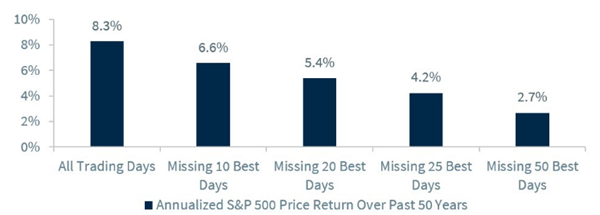
Panic selling that may arise from a correction, along with the potential loss from not investing on the market’s best days, has significantly impacted investor performance over the past 50 years.

Panic selling can weigh on the long-term performance of a portfolio.

Source: Raymond James – Juliusbaer

Ponte en contacto con nosotros

Receive the best financial market news

Cookie Policy

We use our own and third party cookies to improve our services and show you advertising related to your preferences, by analyzing your browsing habits. By continuing, you confirm that you have read and accept this policy.